“Anytime is the right time to start signing, but right now is the best.”
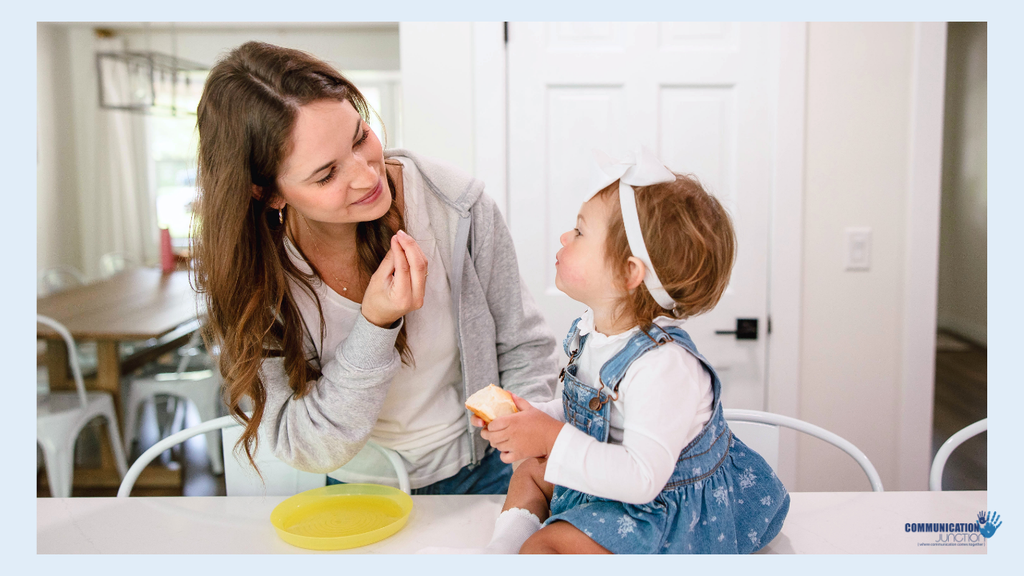
That’s the answer I give whenever someone asks when they should start teaching baby sign language.
Let me explain.
The reason anytime is the right time is because signing supports communication and language development regardless of when you begin. There isn’t a window that you can miss, and there isn’t a “perfect” age to start.
The reason right now is the best time is because you’re interested, engaged, and ready to learn. And when the adult is ready to consistently model signs, that’s when signing becomes most effective.
Many parents are looking for a more specific answer. Unfortunately, there isn’t one.
Teaching your baby sign language is a lot like teaching spoken language. We start talking to babies from day one, even though they won’t say their first words for many months. The same is true with signing. You can begin signing long before your child is able to sign back.
The biggest difference? Most caregivers are learning the signs themselves at the same time they’re teaching them. They’re figuring out which signs to use, when to use them, and trying to remember to model them throughout the day. Unlike spoken language, signing isn’t second nature for most of us. It’s a new skill you’re learning alongside your baby.
Starting Sign Language with Your Baby at 3 Months Old
Around 3 months, many families are beginning to emerge from the newborn stage. Routines are becoming more predictable, you’re feeling a little more human again, and your baby is becoming more alert and engaged with the world around them.
This is a wonderful time to begin adding a few simple signs into your daily routines.
Will your baby sign back right away? No. But they are watching, learning, and building the foundation for future communication.
Starting Sign Language with Your Baby at 6 Months Old
Six months is one of my favorite times to introduce signs.
Babies are often sitting independently, paying attention to songs and rhymes, and becoming more interested in interacting with others. They’re also beginning to imitate gestures, which is an important pre-language skill.
If you start signing with your baby around 6 months, you may not see your baby use signs independently for another few months, but you’ll likely notice growing recognition and understanding.
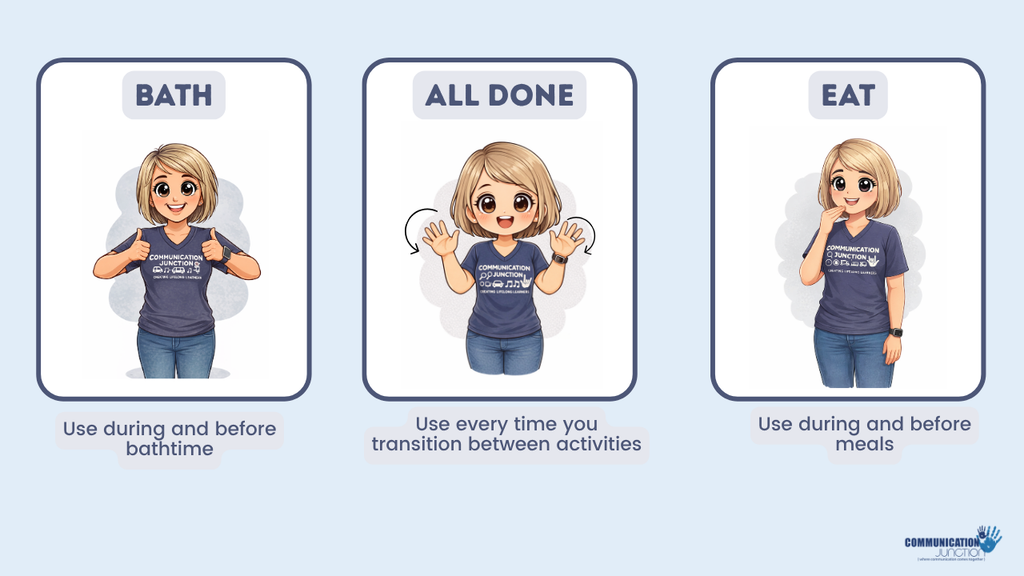
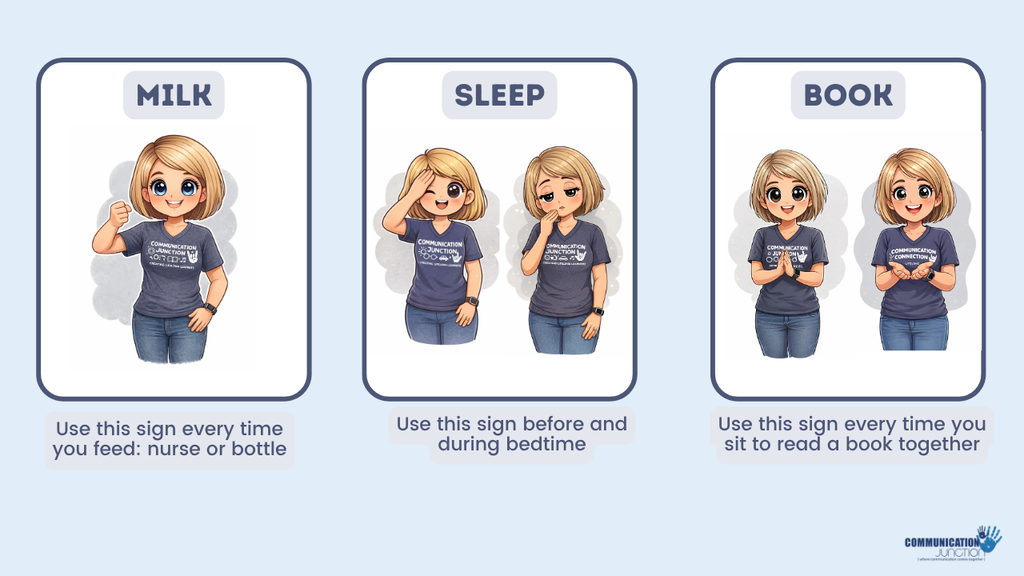
Adding these three signs to the ones you are already using from the 3 month suggestions will give you a nice group of signs to use throughout your daily routines. (Check out our Blog all about Signing in Routines HERE!) This is the best way to use signs – start using them naturally with what you are already doing everyday. This is also how we structure our Sign and Play Classes for babies. Each week is a different theme based around common everyday routines like: bathtime, bedtime, mealtime, playing outside, getting dressed and going places.
Starting Sign Language with Your Baby at 12 Months
By 12 months, many babies are already communicating through gestures like pointing, waving, reaching up, and showing objects.
This is often when parents start wanting a way to understand more of what their child is trying to say before spoken language catches up.
Starting signs at this age can lead to quick success because your child already understands so much language. Many families begin seeing their child’s first signs shortly after they start modeling consistently.
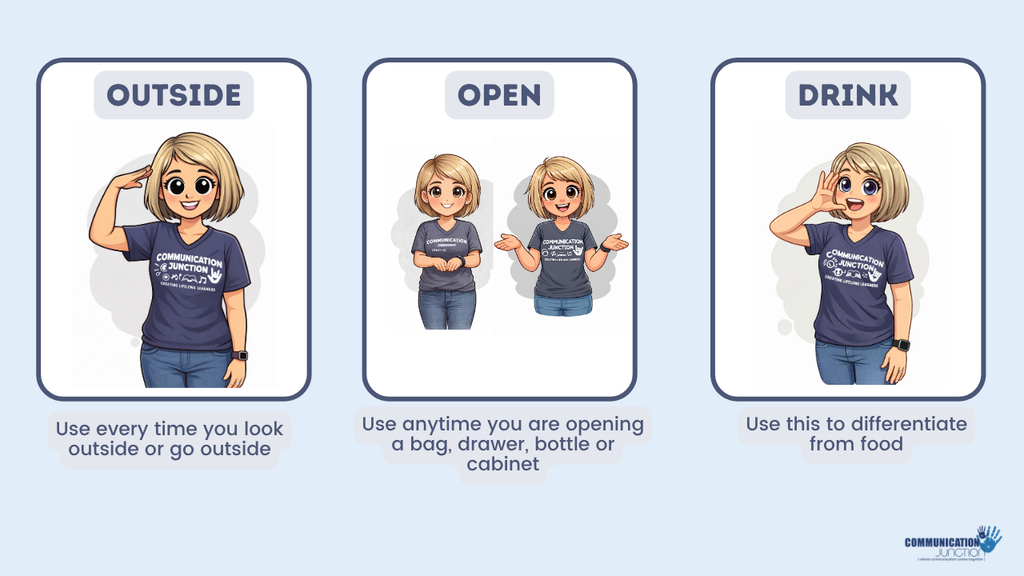
Starting Sign Language at 18 Months and Beyond
Maybe your toddler understands everything you say but isn’t using many words yet. Maybe they’re talking, but you can’t always understand what they’re saying. Or maybe frustration is becoming part of everyday communication.
This is a fantastic time to introduce signs.
At this age, signs can give your child a way to express ideas, reduce frustration, and support spoken language development. Because toddlers are already motivated to communicate, you may see them begin using signs almost immediately. Check out our blogs linked here for more information on the benefits of signing with babies and toddlers.
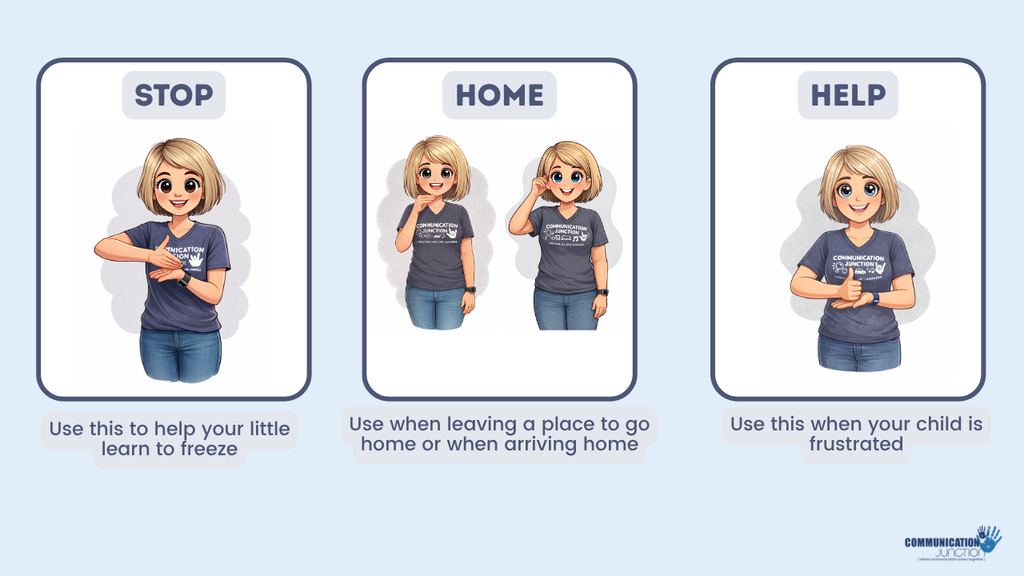
Around 18 months old, parents often start to wonder if their child is hitting their milestones, including how many words their child should be saying. Our Sign and Play classes are structured to support speech and language milestones, provide information and resources to caregivers so they can confidently encourage language development at home, and tips for how to encourage spoken language and signs for specific situations like Potty Training.
How Do You Know It’s the Right Time to Start Sign Language With Your Child?
The right time to start signing is when:
- You’re interested in learning signs.
- Your family’s daily routines feel reasonably established.
- You have the bandwidth to consistently model a few signs each day.
That’s it.
You don’t need a perfect age.
You don’t need a certain developmental milestone.
You don’t need to know hundreds of signs.
You simply need to start.
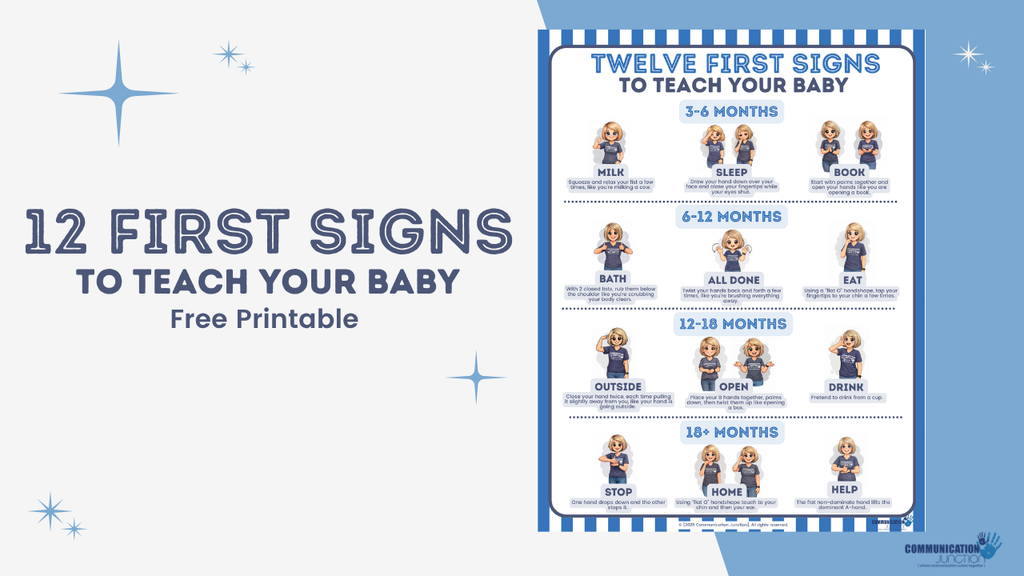
The 12 Best Signs to Start With
When you’re first getting started, focus on signs that you can use over and over throughout the day. Then slowly start to add more as you are feeling more confident and consistent with the signs you are using.
Download our Baby Sign Language Chart!
The best time to start signing with your baby isn’t based on a birthday or milestone.
It’s when you’re ready.
And if you’re reading this right now, that time might be today. The 12 signs in the baby sign language chart linked above are a great start to help you begin to support your child’s spoken language skills with signs. We offer Sign + Play classes that really take a deep dive into each theme, allowing you to learn through songs, books and movement that you can naturally take back to your day. Our classes are taught by language experts (Speech Language Pathologists, Deaf Educators and Early Childhood Experts) so you feel supported and empowered through your journey.