10 spoken words.
That’s the simple answer to the question so many parents are typing into Google (or ChatGPT):
“How many words should an 18-month-old say?”
But I don’t want you to stop there, because “The number of words” is only one piece of the puzzle.
Around 18 months, it’s very common for parents to start feeling concerned about their toddler’s speech. And it makes sense. This is the age when we often see a big shift from mostly understanding language and using gestures… to starting to use more spoken words.
So when you notice other toddlers talking more, and your child isn’t there yet, it’s easy to worry or compare.
While spoken words are an important milestone, speech-language pathologists look at many other skills when determining whether a child may have a speech or language delay.
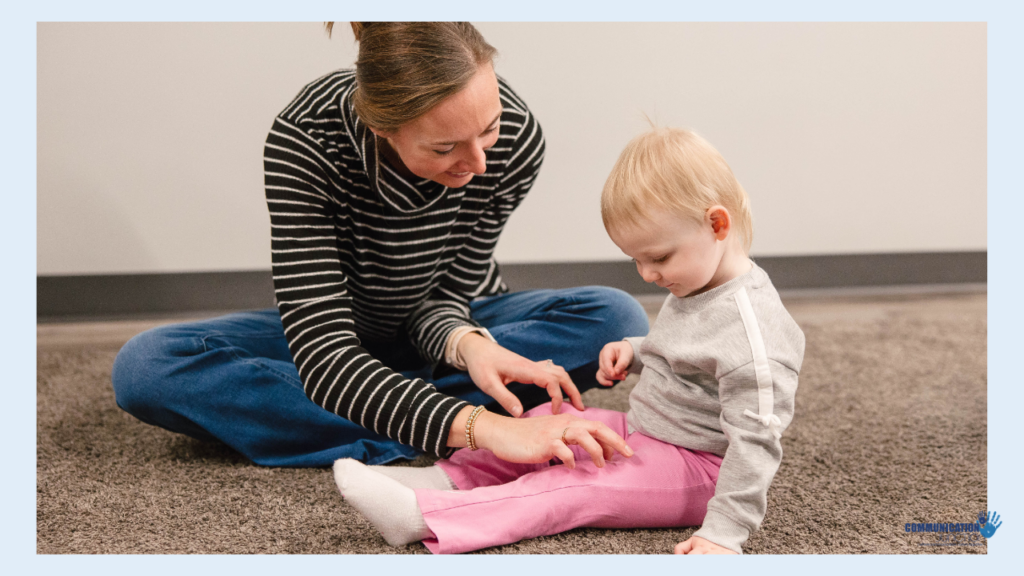
How to Determine if Your 18-month Old is Hitting Their Speech Milestones
If you came to me with concerns about your 18-month-old, here are a few questions I’d ask:
- Are they following simple directions?
- Do they respond to their name?
- Have they had frequent ear infections?
- Are they using signs or gestures to communicate?
- Do you know that some things count as “words” even if they aren’t perfectly clear?
- How are their play skills?
- What about eye contact?
- Do they enjoy interacting with others?
And that’s just the beginning.
As you can see, there’s so much more to language development than just how many words your child says. So, let’s break it down in a simple way.
A Quick Lesson on Language Development
Language development includes two main parts:
1. Receptive Language Skills:
What your child understands
2. Expressive Language Skills
What your child communicates (words, signs, gestures, sounds)
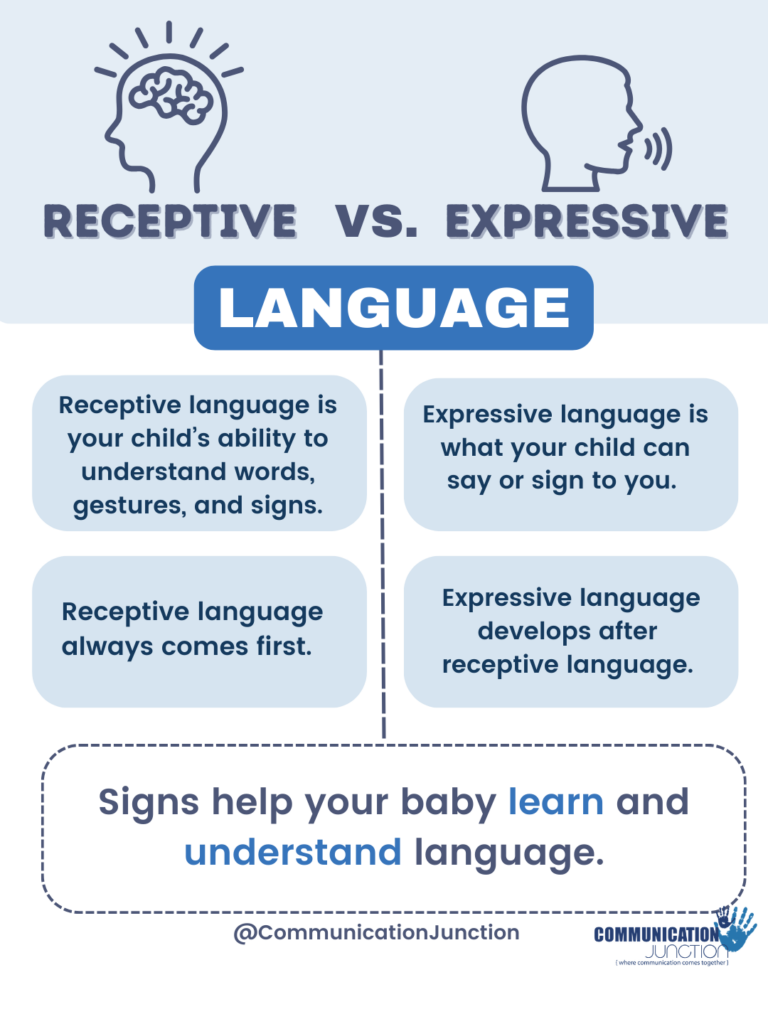
In typical development, receptive language always comes before expressive language.
Think: You have to understand before you can say it. This is especially important at 18 months, because this is often the age when children begin shifting from mostly understanding…to using more spoken language.
What Should an 18-Month-Old Be Doing?
To keep things simple, let’s look at three categories:
- What they understand
- What they say or show
- How they play and interact
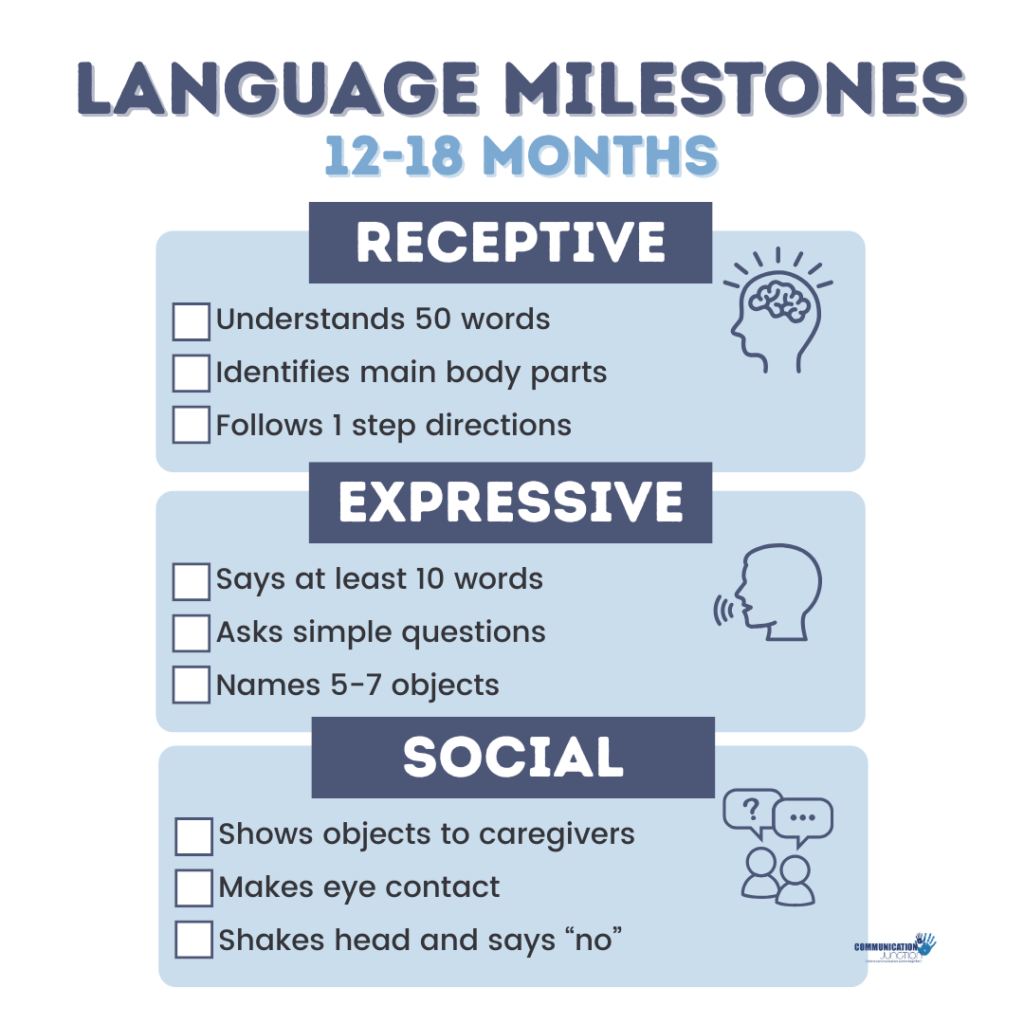
1. What They Understand (Receptive Language)
By the end of 18 months, your child should typically be able to:
Understand at least 50 words
This means when you name something, your child shows recognition by:
- looking at it
- pointing
- going to it
- reacting with facial expression
Follow One-Step Directions
Examples:
- “Get the ball.”
- “Point to the book.”
- “Stack the block.”
Identify Body Parts
Your child may point to body parts on themselves and also on a doll or stuffed animal
- eyes
- nose
- mouth
- toes, etc.
Find Objects That Are Not in Sight
For example, when you say, “Let’s go get your shoes,” your child understands what you mean even if the shoes aren’t visible.
For more on that, I break down the Four Skills Your Child Should Master Before Spoken Words here.
Enjoy Rhymes and Finger Plays
They may participate with gestures, signs, sounds, or even a few words. If you’re in need of a few new rhymes or some examples, check out our YouTube Channel.
Attend to Pictures in Books
This means they stay engaged while you read, look at pictures you point to, and may begin pointing themselves.
2. What They Say or Show (Expressive Language)
By the end of 18 months, your child should be able to:
Use Least 10 Spoken Words
Many 18-month-olds may have closer to 50 words, but 10 words is the milestone we look for.
(A word doesn’t have to be perfectly pronounced to count! I break down what counts as a word here.)
Name Common Objects
Examples:
- ball
- cup
- dog
- mama
- car
Answer Simple Questions
Often using: “That?’ or “What’s that?” Usually Paired with Pointing
Imitate Sounds and Words Often
They may copy your sounds or familiar words spontaneously during play and daily routines.
Combine Gestures and Vocalizations
Examples:
- pointing while making a sound
- signing “more” while vocalizing
- reaching while saying “uh!”
Request Wants and Needs
They should be able to communicate when they want help, food, attention, or more of something.
Use a Variety of Consonant Sounds
Common early sounds include:
b, m, p, d, n, g, h, w
3. How They Play and Interact (Social Communication)
By the end of 18 months, your child should be able to:
Play Functionally
Examples:
- Pretending to drink from a cup
- Brushing hair
- Talking” on the phone
Imitate Actions During Play
Like:
- Patting a baby doll
- Knocking down a tower
- Pressing buttons on a toy
Show You Objects
Examples:
- Bringing toys over
- holding something up
- pointing to show interest
Shake Head “no”
Protesting isn’t always fun, I know… but it’s actually an important communication skill.
Make Meaningful Eye Contact
Not constant eye contact, but natural, purposeful connection during interaction.
Feeling Overwhelmed? Here’s the Good News.
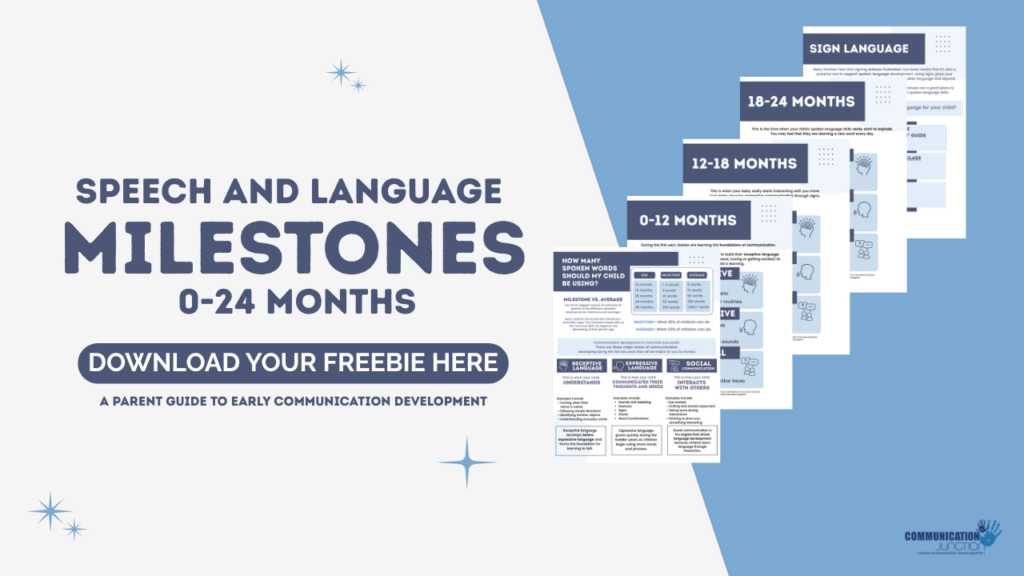
That might seem like a lot to keep track of, but it doesn’t have to feel overwhelming.We created a simple checklist of skills for children 0–24 months so you can track milestones in a clear way without feeling like you’re constantly worrying.
How Do I Support My Child’s Language Skills?
The answer is simple:
Play with them.
Play is the absolute best way to support early speech and language development.
That includes:
- Structured play on the floor with toys and books
- Everyday play during real life routines like laundry, bath time, meals, and errands
Learn more about adding sign language to your daily routines in this blog post.
Tips to Keep in Mind While Playing
- Look at the milestone list below and model skills your child isn’t doing yet
- Use signs and gestures to add clarity and support vocabulary
- Simplify and repeat
- If your child isn’t responding, you may be using too many words
- Use short phrases and repeat them often
What to do if your child needs extra support
If you think your child might need a little extra support, Early Intervention is there for you.
Early support is never a bad thing. Speech delays are more common than many parents realize and getting help early can make a big difference.
You can request a free speech and language evaluation through your state’s Early Intervention program (no referral needed).
What About Sign Language?
Yes, signing can absolutely help support spoken language development.
Signs reduce frustration, increase communication, and help children build vocabulary.
You’ve got this!
Abbey