If you’re looking for a “how-to” guide for all things potty training, this is not your blog post. BUT, if you’re looking for a way to empower your toddler and set your entire family up for success while potty training, you’re in the right place.
What We’ve Learned as Moms
Here at Communication Junction, our staff of moms has potty trained over 30 kids. That’s a lot of opportunities to perfect the potty training process. But guess what, it’s not a perfect process and it is truly different for every one.
I polled the team about their experiences, and while everyone’s looked different (some wildly) we did agree on a few basic principals:
- Follow your child’s lead.
- No one loved this parenting task.
- Visuals made the process easier.
Why Use Sign Language for Potty Training?
Let’s talk about those visuals. Visuals can mean a lot of different things: visual schedule, a reward chart and even signs.
Using sign language while potty training is a huge parenting hack. When a situation is new, uncomfortable and stressful, verbal communication is the first thing to go. For this reason, using sign language while potty training can be a lifesaver for both the parents and the kiddos, because it is easier for everyone to access than words during these situations.
Benefits of Sign Language During the Potty Training Process
1. For Parents
Signs help you clarify your message. Modeling sign language when potty training can help your little one understand the direction. The visual cue might be all they need to help them stop, go potty, sit, or wait—or that sign paired with your spoken word, might help them understand the process.
2. For Children
Signs give your child a way to communicate—when words are hard to find. For example, teaching your child the sign language for potty or the specific sign language for pee and poop allows toddlers to tell you exactly what they need without frustration or spoken words.

How to Teach Potty Training Signs
Make it Part of Your Routines
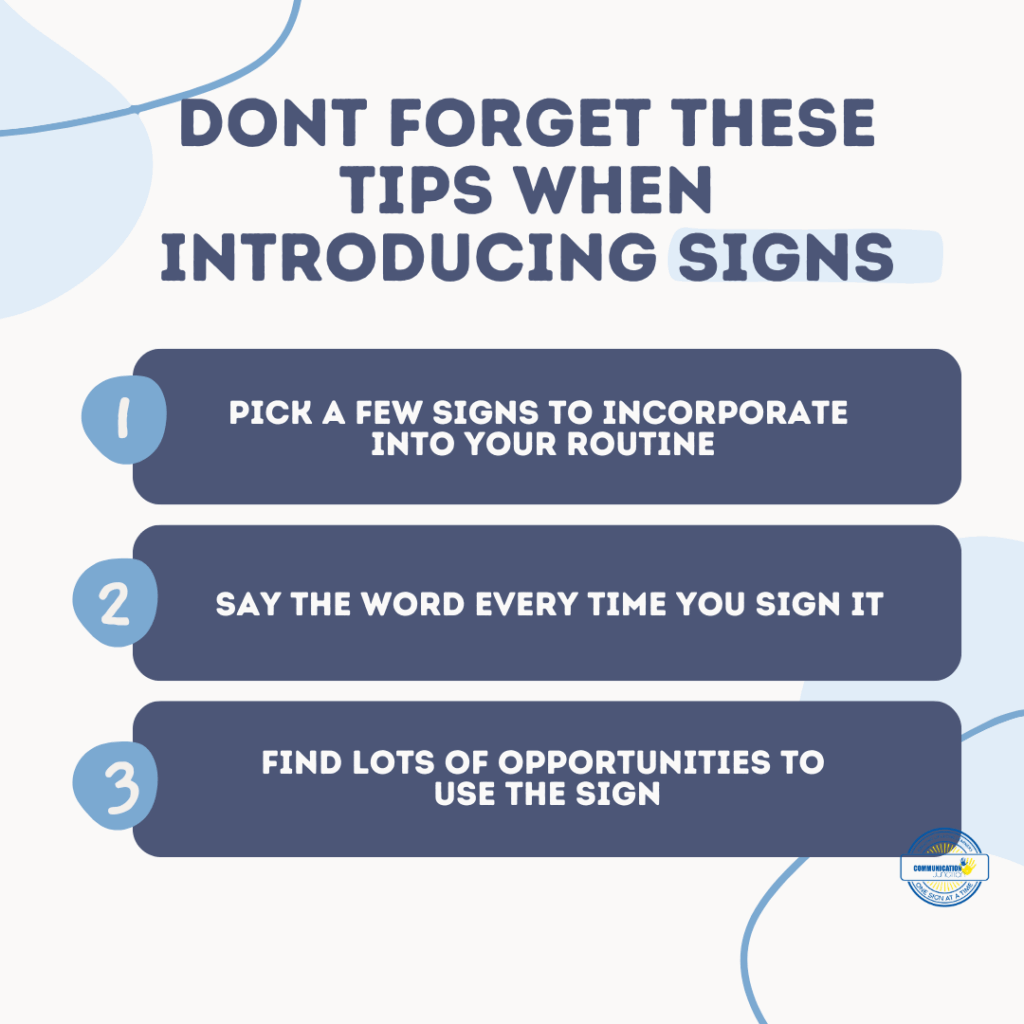
At Communication Junction, we believe that teaching your toddler sign language should not be something extra. It needs to be part of our routine. (Just like how we teach all signs. Make them a part of your routine.)
We gathered feedback from our families in class, on social media and our own team to come up with 12 signs that will get you started when potty training.
Incorporate Signs into Playtime
We also believe that routines and expectations are best taught through play and modeling so your child can become familiar with the vocabulary. Think about how your child pretends to feed their baby, vacuum or talk on the phone. When starting your potty training journey, take it to play. Grab a stuffy, a potty and model that language and expectations. Then your child can start to learn the process and imitate it, making the generalization to the real life routine, so much easier.
Sign While You Read Books
Reading about new situations is also a great way to expose your child to new vocabulary and routines. We have created a list of our favorite children’s books about all things potty training here. Grab them on Amazon (all sales benefit our scholarship program) or check them out at your local library.

Want more communication support for your family?
Our Sign + Play classes give families the chance to practice signs together in a fun, interactive setting—with expert guidance from speech-language pathologists and educators.
Brand New (and Free!) Potty Training Resource
Let’s put this all together to help you have an empowering and successful potty training experience! We are so excited to share our long-awaited free potty training resource for parents and kids! It includes:
- 12 essential potty training signs we recommend for families
- A read-aloud video of one of our absolute favorite children’s potty books
- Everything you need to start building vocabulary and confidence around potty training—in a fun, kid-friendly way.

Potty Training is Hard, Communicating It Doesn’t Have to Be
I promise, your child won’t go to college in diapers (even though it may feel like this journey has no end). The best potty training method is the one that works for your family, but exposing your child to helpful vocabulary and signs can make the journey smoother (and maybe even enjoyable).
One of my favorite potty training memories? We still have an old voicemail saved of Colin proudly announcing, “I peed on the potty!” That little success meant the world to him—and to us.
Good luck on your journey, parents. You’ve got this!