
When my boys were little, one of their favorite games was Uno Moo! It was similar to Uno, but focused on matching colors and animals—two perfect categories for introducing signs during play. I still remember sitting on their bedroom floor thinking about how easily families could use signs with simple games like this at home. (Of course this was way before Instagram reels so I just tucked it away as a great idea to share in class sometime).
Now, I have a platform to share these great ideas on! In our classes, we teach families how to use signs during everyday routines. While playtime is absolutely a routine, many parents aren’t always sure how to naturally add signs into the games and toys they already have at home.
The good news? You don’t need anything fancy to get started.
Signs to Use During Playtime
No matter what you’re playing, there are a handful of signs that work with almost every activity. Playtime naturally teaches skills like sharing, taking turns, waiting, and asking for help, making it the perfect opportunity to pair language with signs.
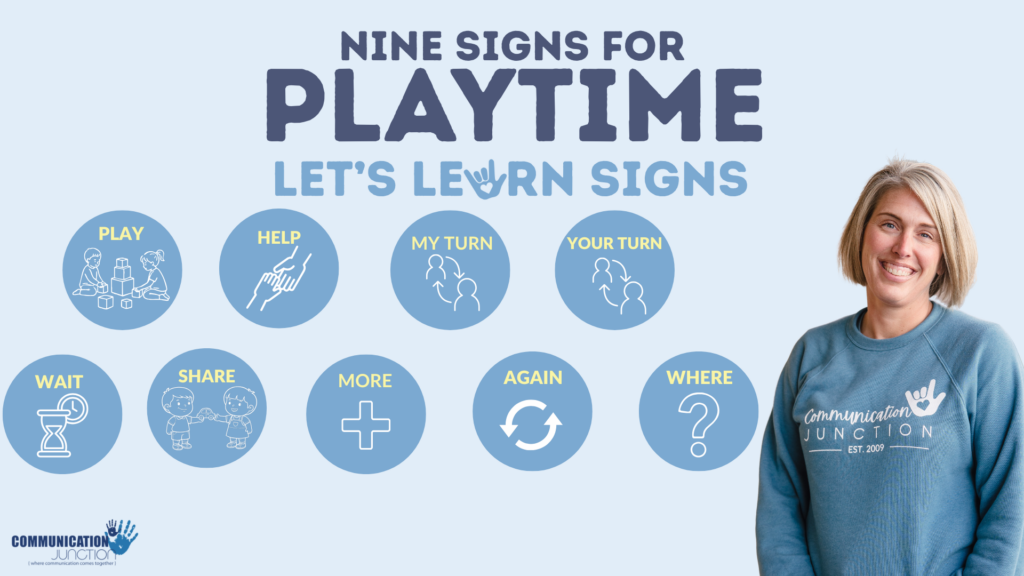
Simple Signs to Use During Playtime
- Play – Sign PLAY in ASL to start the routine
- Help – Sign HELP in ASL when your little one is starting to struggle or is stuck
- My turn – Sign MY TURN in ASL during the game and model this when it is your turn
- Your turn – Sign YOUR TURN in ASL during the game and model this when it is your child’s turn
- Wait – Sign WAIT in ASL to help your little wait their turn
- Share – Sign SHARE in ASL to remind your little one
- More – Sign MORE in ASL to request more book, toys or turns
- Again – Sign AGAIN in ASL to request to play the game or take a turn again
- Where – Sign WHERE in ASL when looking for something in the game
Using these signs consistently during fun, familiar activities helps your child connect meaning to the words and concepts you’re teaching. It also makes it easier to use those same signs during more challenging moments later on.
Remember: model the sign often, but don’t expect your child to immediately copy it back.
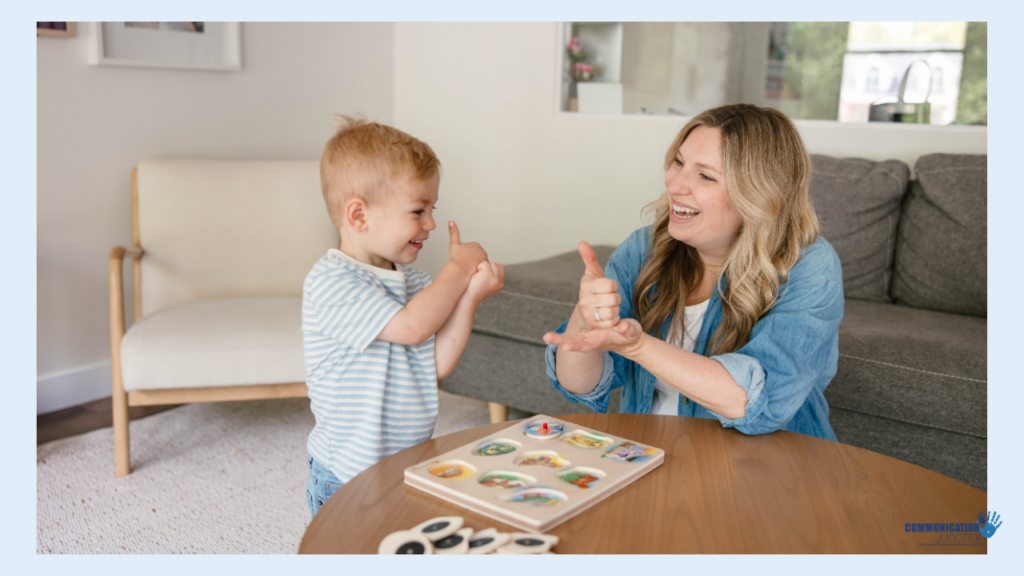
Signing with Puzzles
Puzzles are one of our favorite toys at Communication Junction because they support vocabulary, problem-solving, and fine motor skills all at once.
When using signs with puzzles, start with the general play signs above, then add signs that match the puzzle theme.
If your puzzle features animals, use animal signs and sounds. If it’s transportation-themed, pair vehicle signs with color signs to create simple two-word phrases.
The goal is to help your child learn to play and grow their language skills at the same time..
Signing with Matching Games
Matching games were always a favorite in our house because they can be adapted to almost any topic your child loves.
As you play, use the signs above, but also try using signs like:
- Match
- Same
- Find
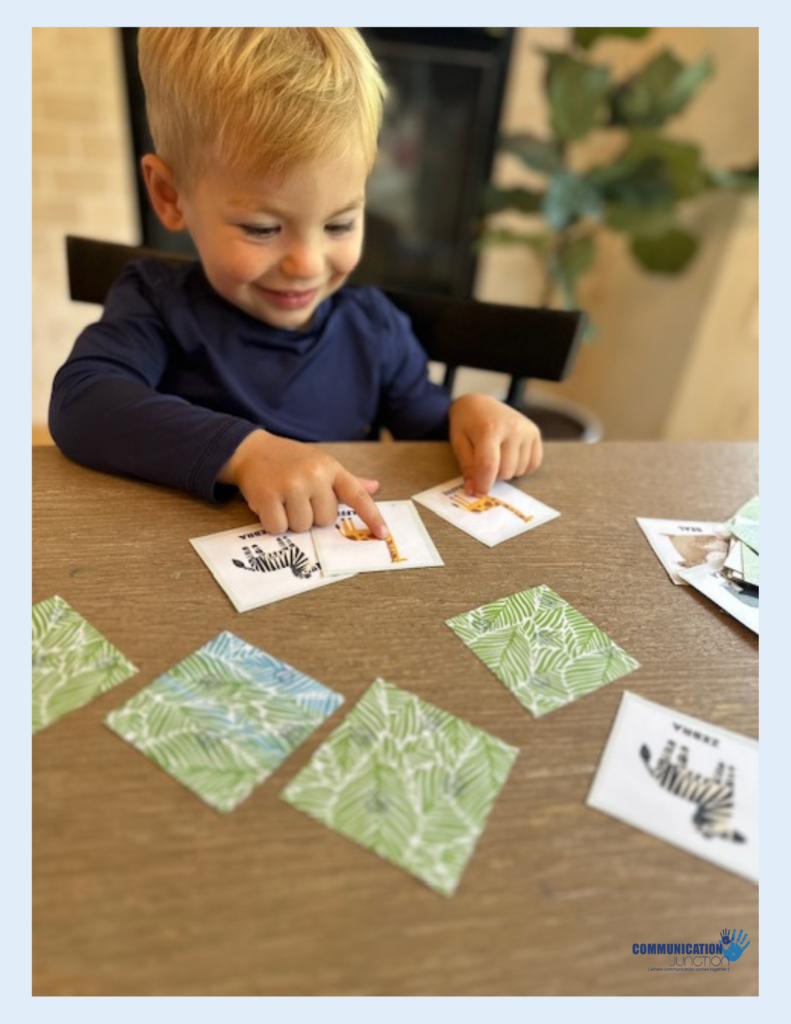
One of the things I love most about matching games is how naturally they encourage repetition. Your child hears and sees the same vocabulary over and over again while staying engaged in the activity. That repetition is exactly what helps build understanding and confidence.
To help you get started, I created a free zoo animal matching game that you can download and use at home. This ready-made printable game is a fun way to introduce zoo animal signs while also practicing early learning skills like matching, turn-taking, and vocabulary development.
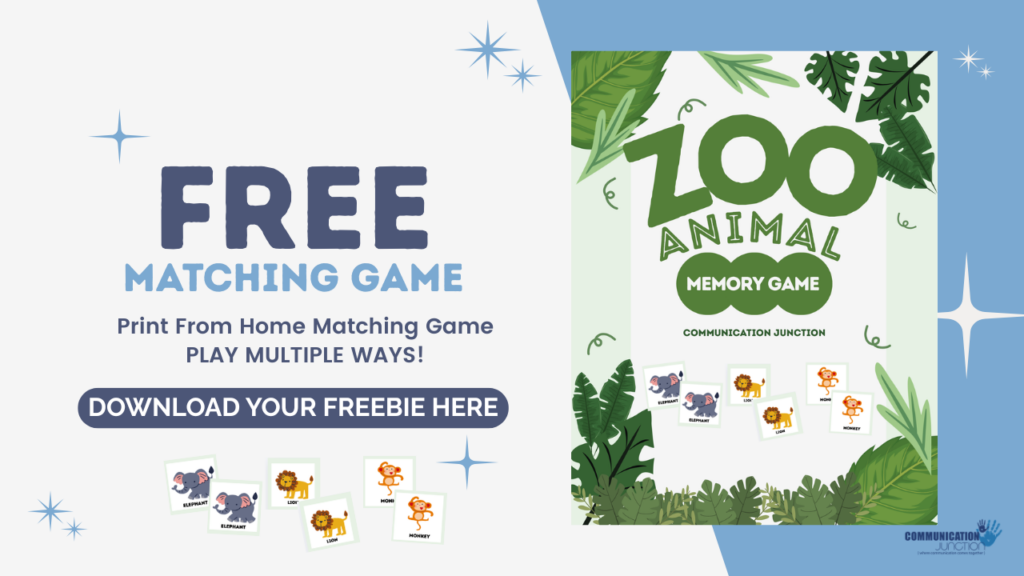
You can use the cards in several different ways depending on your child’s age and attention span:
- Match identical animal cards together
- Hide cards around the room and “find” them
- Practice animal sounds along with the signs
- Sort animals by color or size
- Use the cards for memory-style games with older toddlers and preschoolers
The download also includes a video demonstration of the animal signs so you can confidently model them during playtime.
Whether your child loves lions, monkeys, elephants, or zebras, this activity allows you to practice signs, have fun and learn together.
For more activities like this, check out our Busy Bags!
Our Busy Bags are designed to help families support learning through play at home, on the go, or anytime you need a quick activity. Each bag focuses on skills like vocabulary development, matching, sorting, sequencing, fine motor skills, and early number and letter concepts. Busy Bags coordinate with the themes we teach in class, but anyone can purchase them—no class registration required. Best of all, all proceeds benefit the Annual St. Jude Telethon.
Signs to Use with Blocks
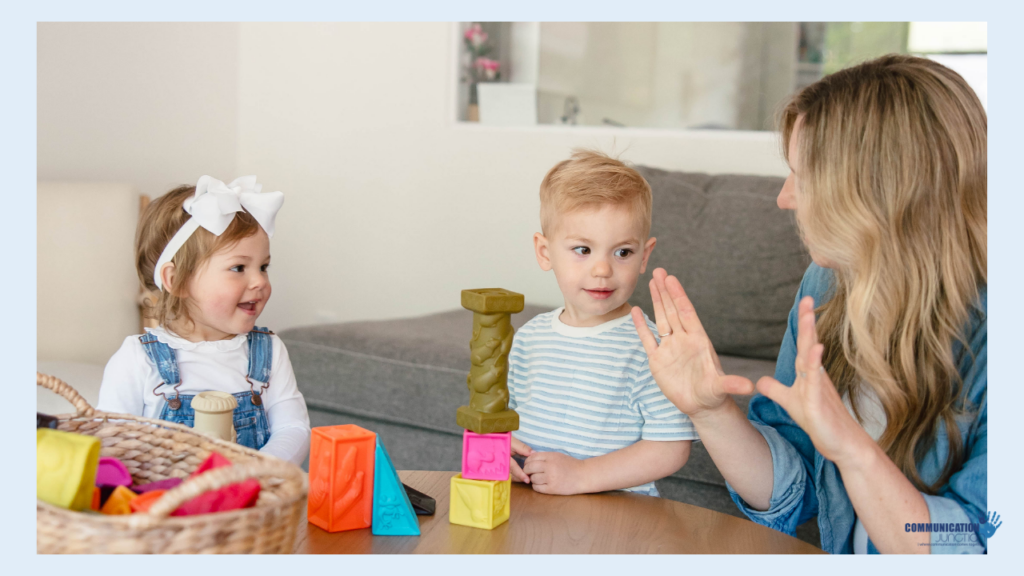
Blocks are one of the best open-ended toys for language development. They naturally encourage repetition, action words, counting, and descriptive language.
Try pairing your play with signs like:
- Block
- Up
- Fall down
- More
- Again
- 1, 2, 3
You can also incorporate colors, counting, and signs for pictures or objects shown on the blocks themselves.
Making Playtime Meaningful
There are so many simple ways to add signs into your everyday playtime. Start with general signs like WAIT, SHARE, MY TURN and HELP, then build on them with signs that match your child’s favorite toys and games.
Most importantly, keep it fun.
Playtime is one of the easiest and most natural ways to build communication skills, strengthen connection, and introduce signs in a way that feels engaging for both you and your child.
If you’re ready to get started, don’t forget to download our free zoo animal matching game complete with sign demonstrations to help you play and learn together.