You’ve probably heard that signing can reduce your baby’s frustration and increase communication. But did you know that signing also helps your baby learn to talk?
It’s true—supporting your baby’s spoken language journey with signs and gestures is part of how they naturally develop speech. Let’s break down how it works.
The Four Skills Your Baby Needs Before Saying Their First Words
In order for your baby to say their first words, they need to develop four key skills:
Object Permanence
Understanding that things exist even when they can’t see them. It’s the first step toward understanding that words represent people and things—even when they aren’t visible.
Example: You hide a toy under a blanket, and your baby looks for it.
Cause and Effect
Understanding that when they do something, something else happens. This skill builds the foundation for communication—children realize their actions (and eventually words) can make things happen.
Example: They shake a rattle and hear a sound.
Joint Attention
The ability of two or more individuals to share a common focus on an object or event. Teaching baby that words label what you’re both noticing—essential for vocabulary growth.
Example: You point to a ball, your baby looks at it with you, and you both share that moment.
Imitation
The ability to copy what you do. This is the skill that ties everything together and helps children learn to talk—first copying movements, then sounds, then words.
Without imitation, babies can’t copy your sounds, gestures, or signs.
These skills work together to prepare your little one for their first words around 12 months old.
The Imitation Hierarchy: How Babies Build to Spoken Words
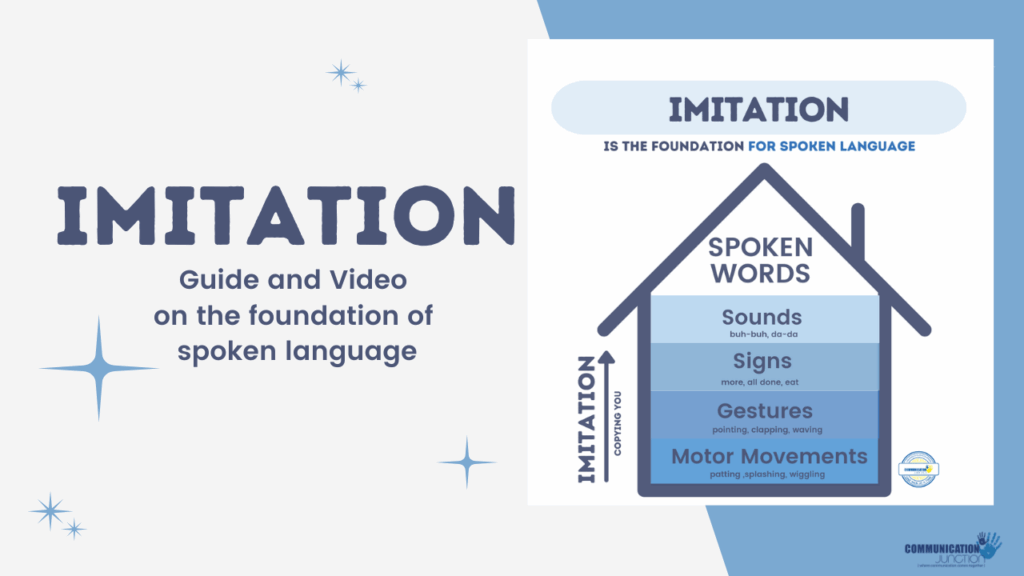
Babies move through a predictable sequence of imitation skills, we call it the Imitation Hierarchy.
Here’s how it works:
Social Engagement
-
- Your baby learns to make eye contact, giggle, and respond to you.
-
- This is how they begin attending to your face, expressions, and actions.
Imitating Motor Actions
-
- Your baby starts imitating you by copying simple actions like banging blocks, patting the floor, or dancing along to music.
Imitating Gestures
-
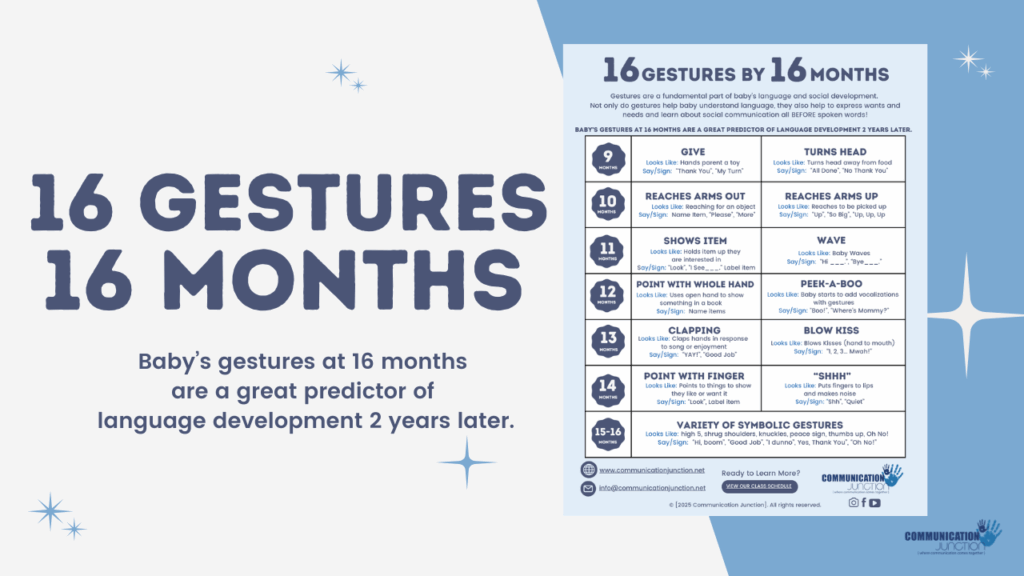
- Waving, pointing, clapping, and playing peekaboo.
-
- Research shows babies start imitating gestures around 9 months old.
-
- The number and quality of gestures at 16 months is a strong indicator of spoken language skills at 36 months.
Imitating Signs
A sign is a gesture that represents a particular word or concept.
-
- Example: Signing milk to request milk, or all done to indicate they’re finished.
Signs help babies meet their needs while attaching meaning to hand movements.
Imitating Sounds
-
- Babblings a variety of consonants and vowels
Imitating Spoken Words
-
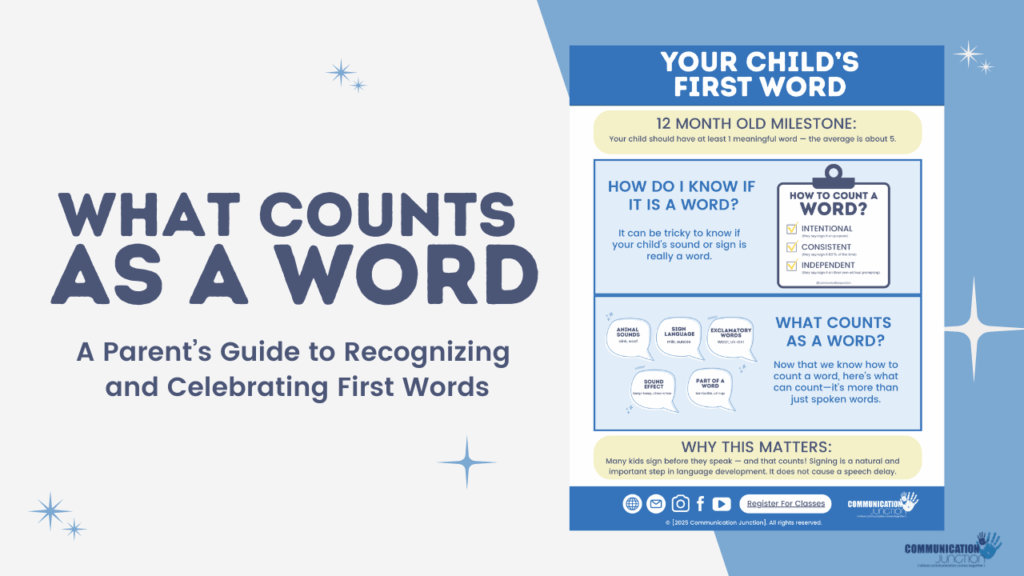
- Most babies begin talking around their first birthday, with 1–3 meaningful spoken words by 12 months.
Modeling is Key When Teaching Your Baby to Talk
Here’s the magic—while your baby moves through these stages, you are modeling every level:
-
- When your baby claps, you say, “Yay!”
-
- When you play peekaboo, you say, “Boo!”
-
- When your baby signs milk, you say, “Milk.”
-
- When you sign all done, you also say, “All done.”
This way, your baby is hearing the words and seeing the meaning at the same time. When they’re ready to speak, they already know the word and what it means.
The Research Connection: How Sign Language Leads to Spoken Language
Research by Susan Goldin-Meadow (2014) shows that once a child learns a sign, they typically say the spoken word about three months later—especially if they’re in that critical window for spoken language development.
In other words: Signs don’t replace speech. They pave the way for it.
When to Start Signing With Your Baby
Just like you don’t wait until your baby can speak before talking to them, you don’t have to wait until they can imitate signs perfectly before modeling them.
You can start introducing signs and gestures as early as you’re ready. The more your baby sees and hears them, the more tools they’ll have to communicate when they’re ready.
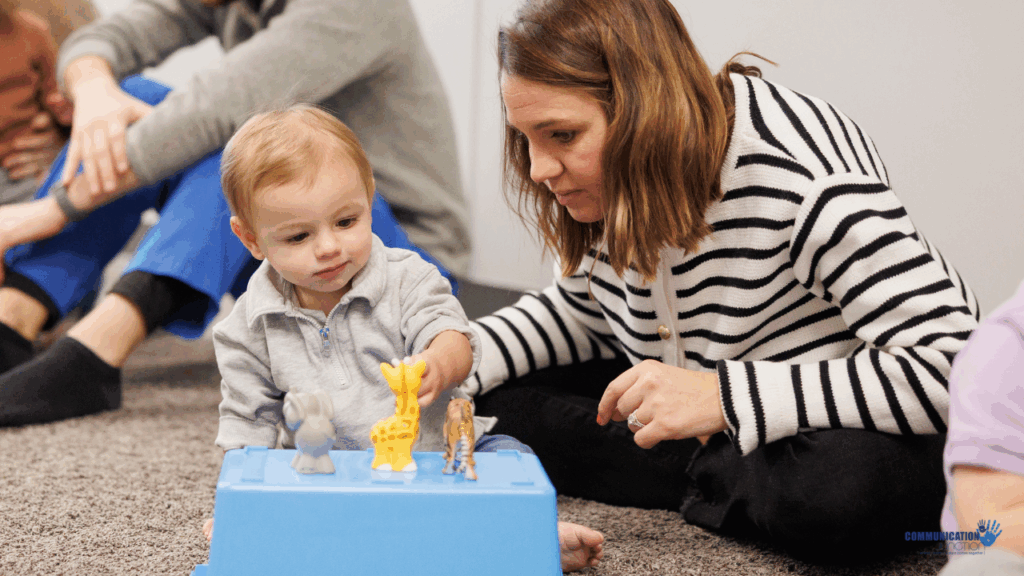
Signing with Your Baby Can Help Your Little One Reach Their First Word Faster
The next time someone asks you, “Why are you signing with your baby? Does it really help them talk?” you can confidently say:
Yes! Signs are part of the natural progression toward speech—supporting imitation, joint attention, building meaning, and helping your baby move from gestures to words.
Everything in this post is exactly what we teach in our baby sign language classes: the science behind language development, and simple, practical ways you can apply it at home.
Because when your baby has more ways to communicate, everyone wins.