We’ve all heard that reading to babies and young children is one of the single most important things we can do to support their language development — and it’s true! Research shows that children who are read to regularly, build stronger vocabularies, develop better listening and comprehension skills, and are more prepared for academic success later in life.
When reading aloud with your child they are hearing and learning language: words, tone, intonation and how it flows together. Now think about adding signs. When you add sign language to those early experiences, you’re strengthening that foundation even more. Signing gives your child a visual and hands-on way to understand and use language long before they can speak, supporting the same early literacy and communication skills that make reading so powerful.
Why Add Signs to Reading Time?
When you add signs to your shared reading, you’re helping your child make sense of what they hear and see. The sign becomes the bridge between the words you’re saying and the pictures on the page.
The Benefits of Reading & Signing with Your Child
We know that signs and gestures come before spoken words, so modeling signs gives your little one a way to join in before they can talk. They can show you they see the “bird”, want to read the “again”, or are “all done”.
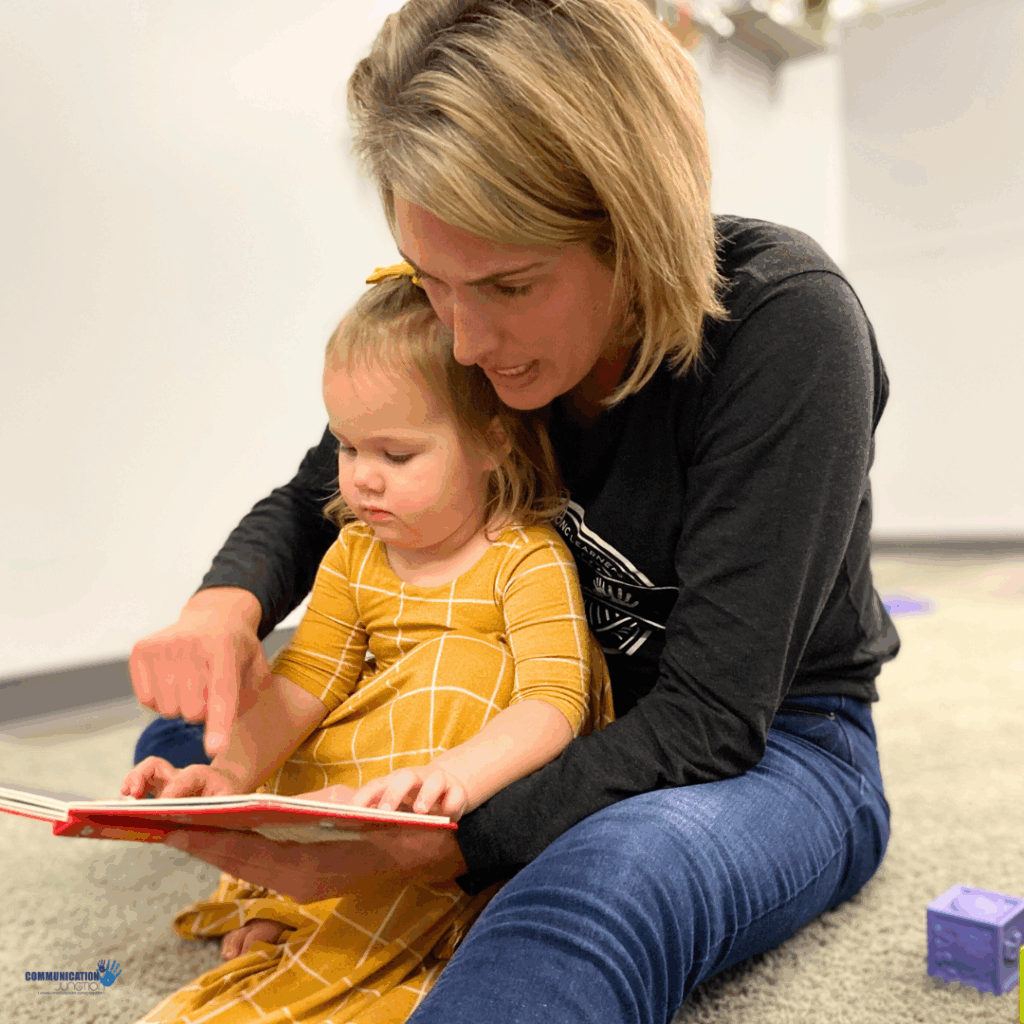
Signing also supports comprehension skills. When you say and sign “ball” and your child points to the ball on the page, they’re showing they understand. Each time you use sign language while you’re reading, you’re helping your child build those early connections that support language, engagement, and understanding of the story.
How to Use Sign Language When You Read
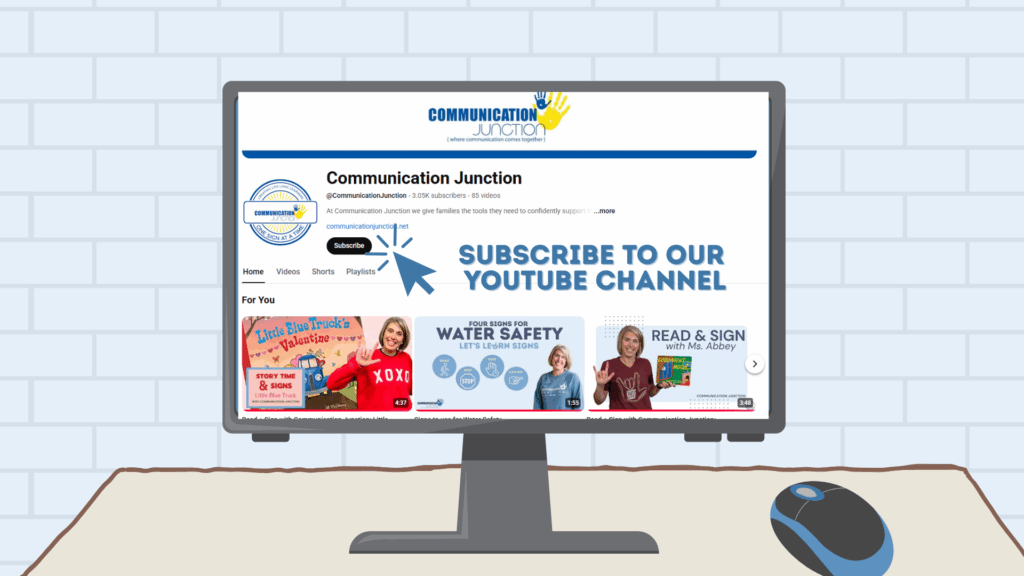
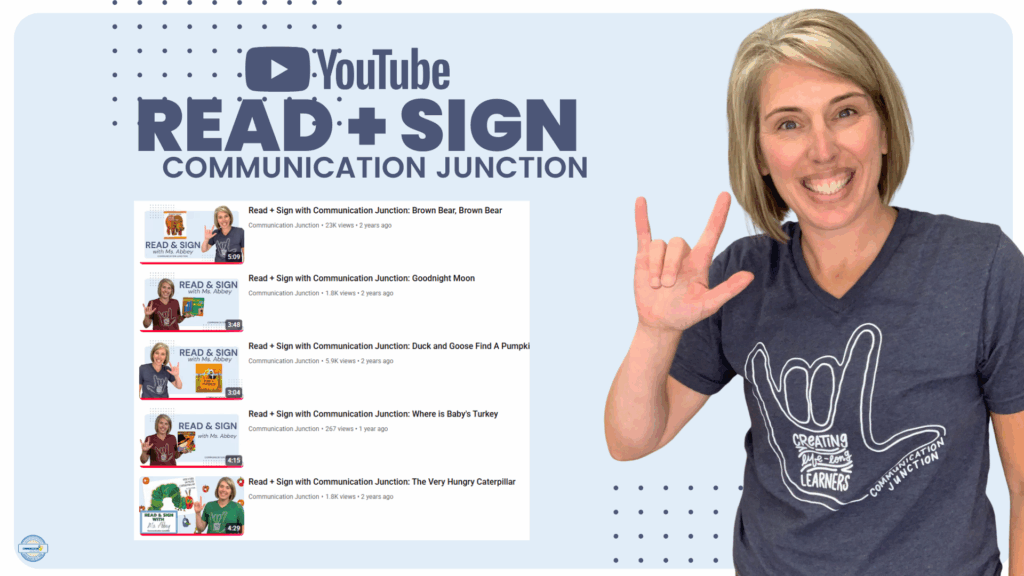
We know it can feel overwhelming to know where to begin, so we’ve made it easy. Our Read + Sign Program on Communication Junction’s YouTube Channel features short videos pairing stories and signs so you can see exactly how to bring signing into your reading routine.
In the meantime, here are a few answers to commonly asked questions about how to use signs while you read.
How Many Signs Should I Use?
As many as you know!
Start with a few key words that naturally come up in your favorite books: “more”, “please”, “eat”, “sleep”, “mommy”, “daddy”, “love”, “book”, “friend”.
Over time, add more signs as you become comfortable. There’s no right number. Every sign you use is an opportunity for your child to connect meaning, participate and grow their understanding.
How Do I Sign While Reading?
We get this question a ton. It’s hard to know the “Right Way” to include signs when reading. TLDR: There is no “right” way, just the way you do it. But here are a few points that we share with our families.
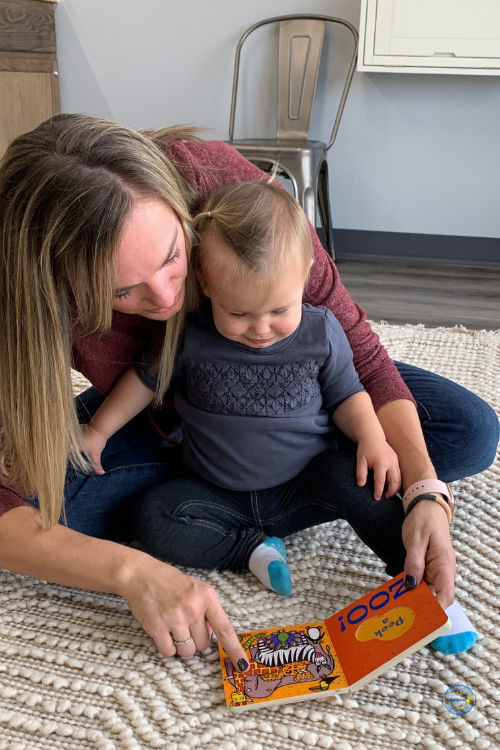
Tips for Using Sign Language While You Read:
- When your child is on your lap: Sign directly on their body or in front of them so they can see your hands.
- What if you need both hands? Pause reading, put the book down and model the sign, and then return to the story. Your child learns just as much from watching you sign as from hearing the words.
- And when your little one becomes mobile and doesn’t always stay on your lap? Keep signing! Even if they’re across the room, they’re still watching, listening, and learning. Every sign you use is language they’re absorbing.
Free Resources to Help You Get Started
Our Read + Sign Program is available on our YouTube Channel.
This program features short videos pairing stories and signs so you can see exactly how to bring signing into your reading routine. Each video highlights key vocabulary and shows real examples of how to model signs as you’re reading. We have a great library that most likely includes your child’s favorite book(s).
If you’re ready to take your reading and signing to the next level, our Virtual Story Time Program is for you. Designed for young children, this engaging 30-minute story time invites families to learn, play, and connect from the comfort of home. Each session is led by a highly-qualified instructor who models using sign language throughout the stories, songs, rhymes, movement, and bubbles — just as you would with your child in everyday life. Together, you’ll learn 3–5 themed signs each month and discover simple ways to weave those signs into your daily routines.
Virtual Story Time is available on-demand all month long for your family to watch again and again. Repetition is a key part of language learning; each time your child watches, they’re reinforcing new vocabulary, strengthening comprehension, and growing more confident using sign language. Virtual Story Time, whether live or on demand, offers a fun, high-quality, and educational screen time option for the whole family — helping your little one build vocabulary, confidence, and a lifelong love of books and communication.
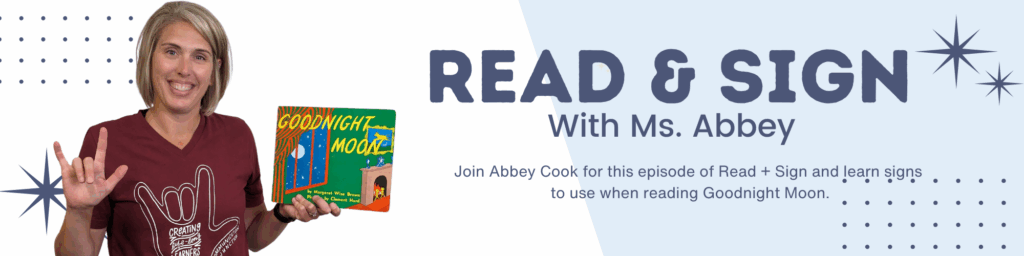
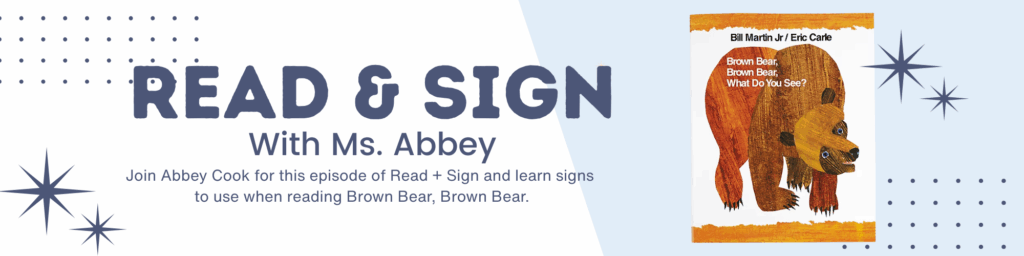
Whether you’re reading Goodnight Moon before bed, Brown Bear, Brown Bear during snack time, or a holiday favorite together on the couch, remember this: every page you turn, every word you say, and every sign you model grows your child’s brain, their vocabulary, and their confidence to communicate.
You’ve got this!