Playing outside in the water can be one of the easiest ways to keep little ones entertained during the hot summer months. Whether you’re playing with a water table in the backyard, painting the driveway with water, or heading to the pool, summer activities create natural opportunities to build communication skills.
Simple water activities help children explore their world through play while developing vocabulary, turn-taking, requesting, following directions, and problem-solving skills. By adding signs and spoken language throughout play, you can turn everyday summer fun into a language-rich opportunity.
Sign Language to Teach Your Child This Summer
Summer is the perfect time to introduce seasonal signs during play.
Some of our favorite summer signs include:
- OUTSIDE
- SWIM
- WATER
- PLAY
- POOL
Learning these signs during real-life experiences helps children connect words, actions, and meaning.
If you’re wondering how to sign OUTSIDE in ASL, start by modeling the sign each time you head outdoors. You can also practice signing POOL in sign language before swim lessons, a family pool day, or while reading books about swimming.
Here are three easy water play activities that require very little setup and are perfect for babies through preschoolers.
Ideas for Summer Water Activities
1. Water Table
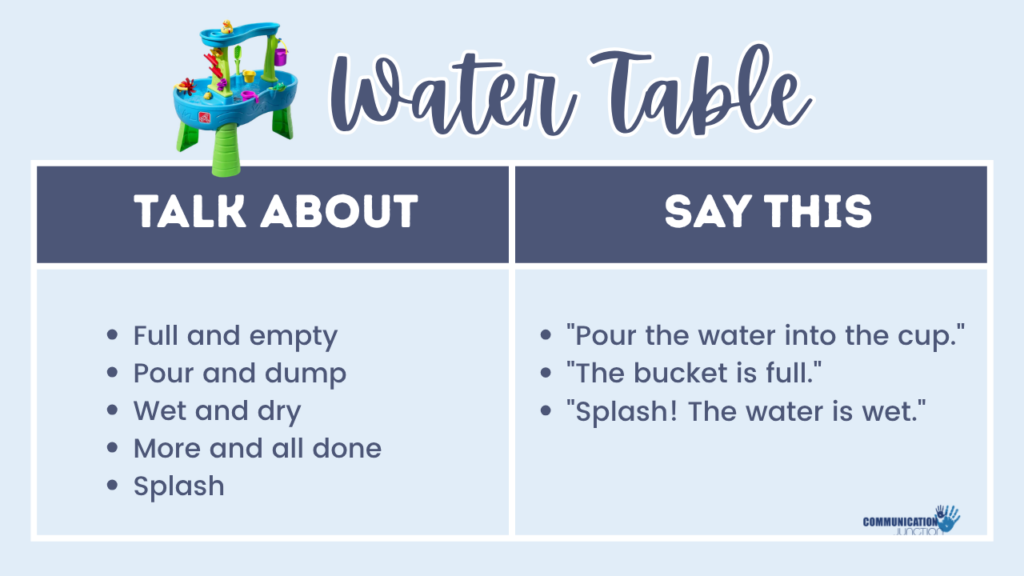
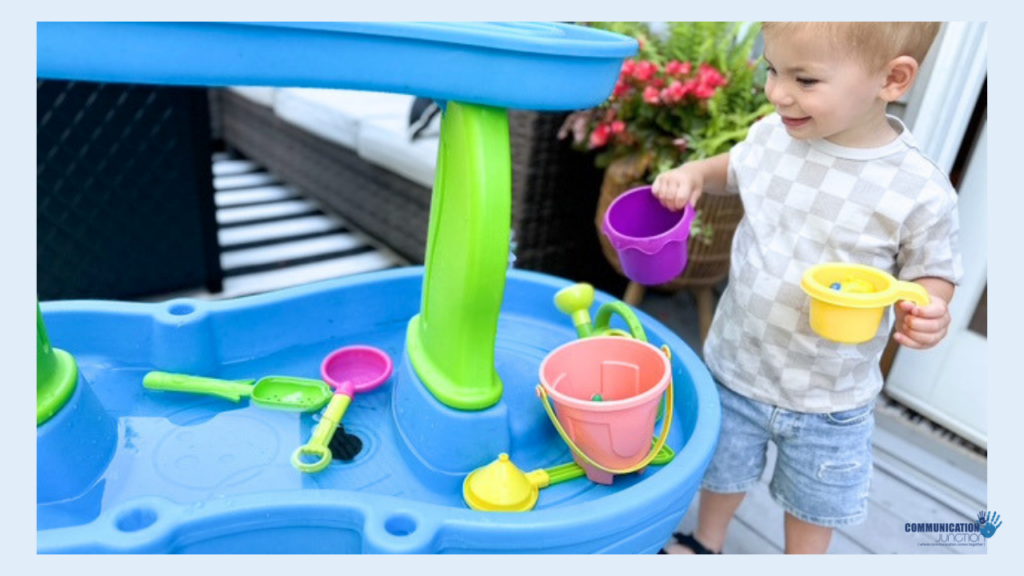
A water table is a classic summer activity because it grows with your child. Babies can splash and explore the sensory experience of water, while toddlers and preschoolers have fun pouring, scooping, filling, and dumping.
Add a few simple items such as:
- Cups
- Measuring spoons
- Funnels
- Floating toys
- Small containers
As your child plays, talk about what they are doing and describe the actions you see.
Signs to Use When Playing with the Water Table:
OUTSIDE, WATER, PLAY, MORE, HELP, ALL DONE
Playing outside with the water table is perfect for practicing ASL vocabulary because children are actively exploring and engaging with the world around them.
2. Sponge and Paintbrush Water Play
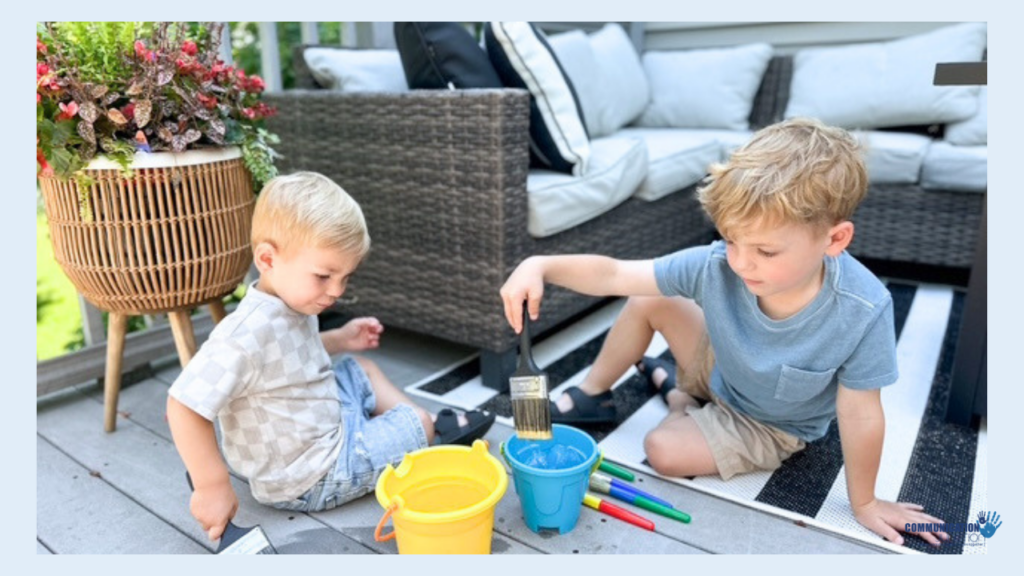
This simple activity requires only a bucket of water, a few sponges, and some inexpensive paintbrushes.
Toddlers and preschoolers can dip the sponges and brushes into water and “paint” sidewalks, driveways, fences, decks, or outdoor toys. As the water evaporates, their artwork magically disappears, inviting them to create again.
Babies may enjoy exploring the wet sponge and watching the water drip, while older children can squeeze, paint, and try filling buckets or drawing shapes and letters with the paintbrush.
Before heading outside, model the sign for OUTSIDE in sign language and invite your child to use it as you set up the activity.
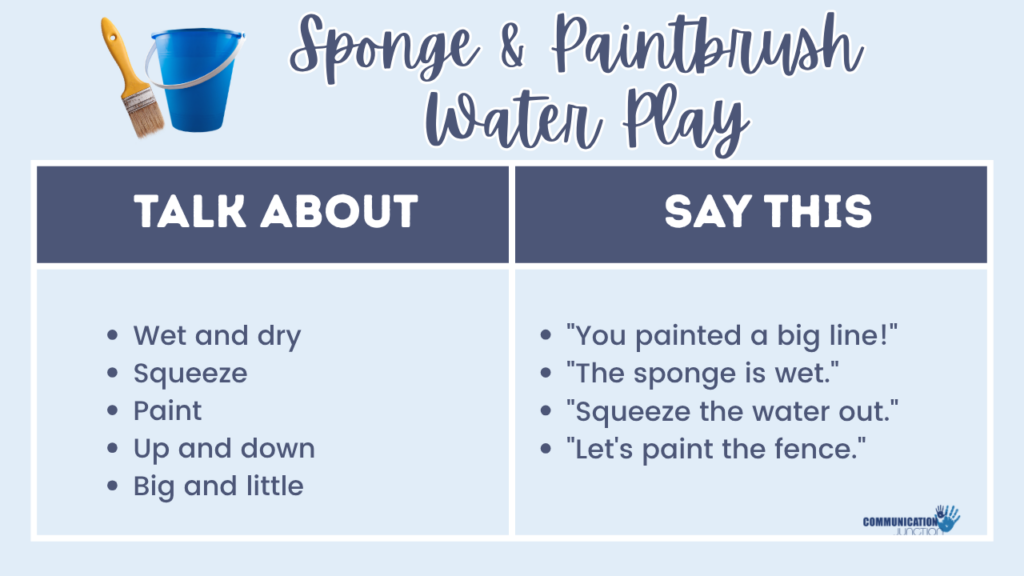
Signs to Use When Playing with the Water and Sponges:
OUTSIDE, PAINT, MORE, HELP, ALL DONE
3. Toy Wash Station
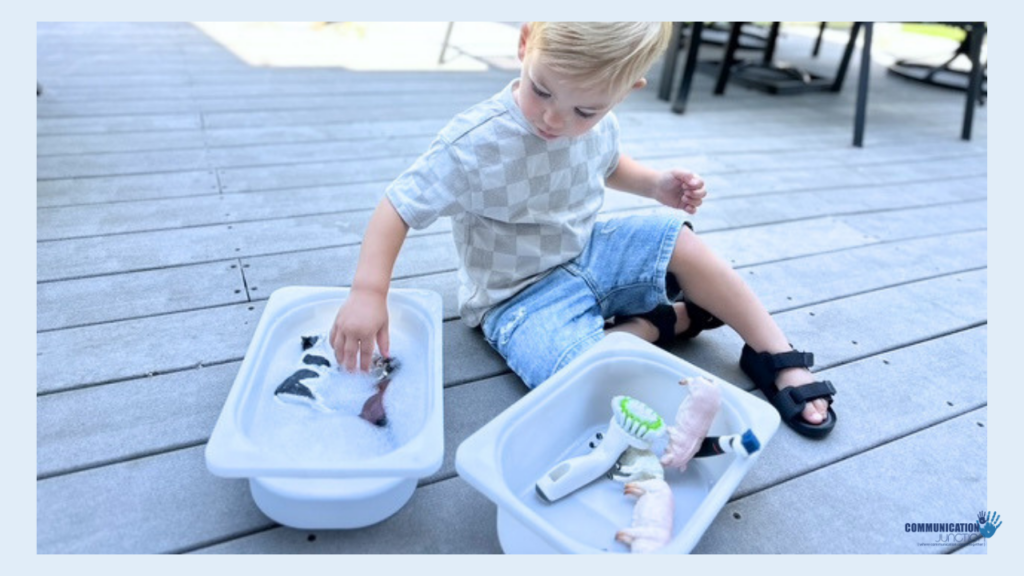
Children love helping, and a toy washing station is a simple way to encourage pretend play while building language skills.
Fill a bucket, bin or water table with water and gather a few washable toys such as:
- Toy cars
- Toy animals
- Dolls
- Play dishes
Add a few drops of bubble solution, dish soap or body wash and a sponge, washcloth, or small brush and let your child get to work.
Pretend play naturally encourages conversation and gives children opportunities to use new vocabulary in meaningful ways.
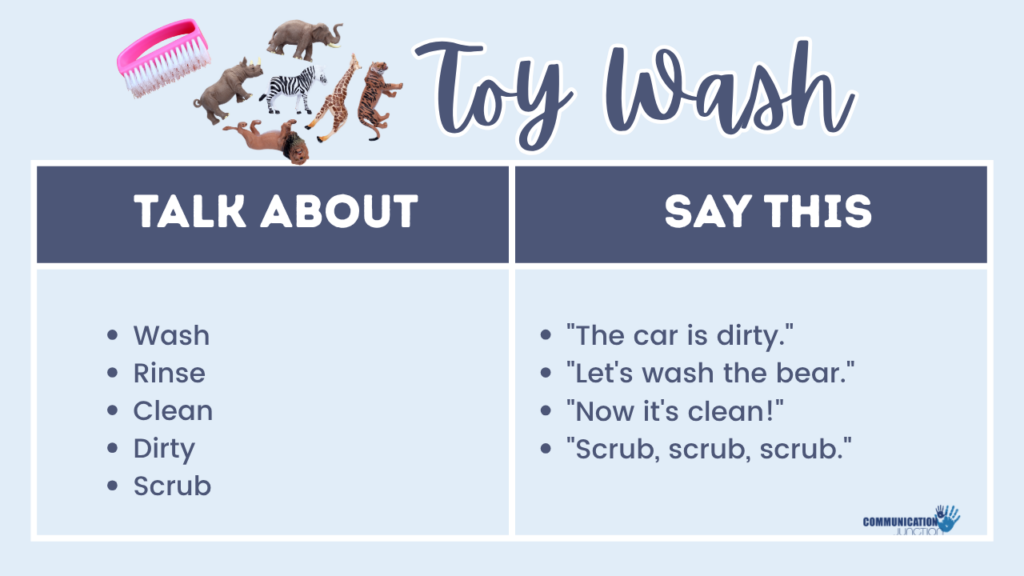
Signs to Use When Playing with the Toy Wash Station:
WASH, WATER, CLEAN, MORE, ALL DONE
If your child enjoys this activity, extend the conversation by talking about other summer water activities such as swimming, visiting a splash pad, or spending time at the pool. Use the ASL sign for POOL or SWIM when you talk about these things.
Make Playing Outside in the Water a Communication Opportunity
You don’t need fancy supplies or complicated activities to support your child’s communication skills. The best language-learning moments often happen during simple, everyday play.
As you play with your little one, focus on following your child’s lead, talking about what they are doing, and modeling a few signs alongside spoken words. Repetition and intentional interactions help children connect signs, spoken words, and actions.
Water play doesn’t have to happen at a pool to support language development. Whether you’re learning how to sign OUTSIDE in ASL, practicing POOL in sign language before a swim lesson, or simply splashing at a water table, these everyday moments help children connect signs and spoken words in meaningful ways.
Looking for even more ways to keep your toddler learning and playing this summer? Check out our Educational Summer Activities for Toddlers for simple, low-prep ideas that support communication, play, and early learning all season long.