IMO, One of the cutest things you’ll ever see your baby do is…
play peek-a-boo.
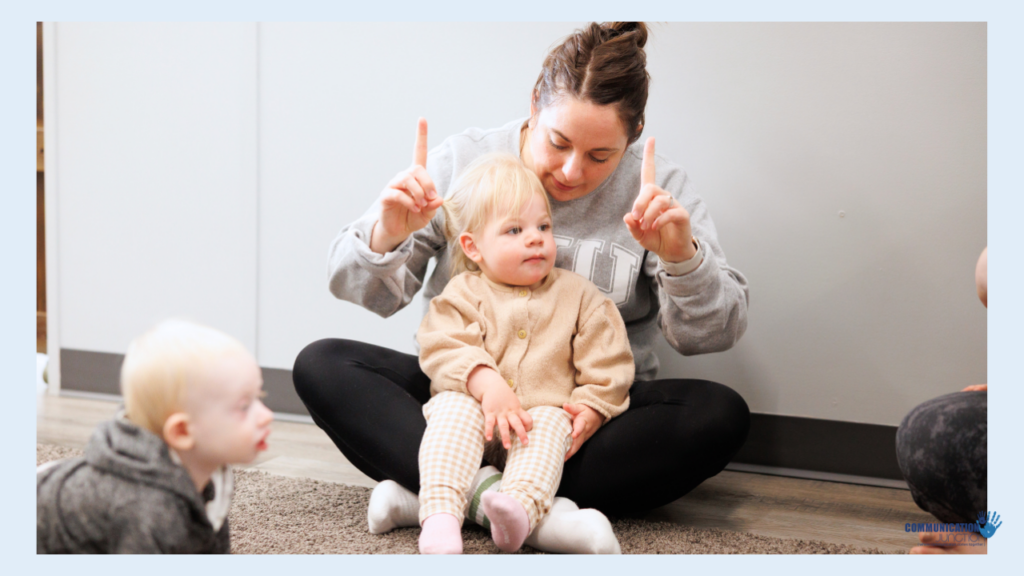
I know it’s hard to pick only ONE thing your baby does that is the cutest… but peek-a-boo will definitely be high on the list. Those little hands covering their ears, forehead or eyes… just melts my heart every time.
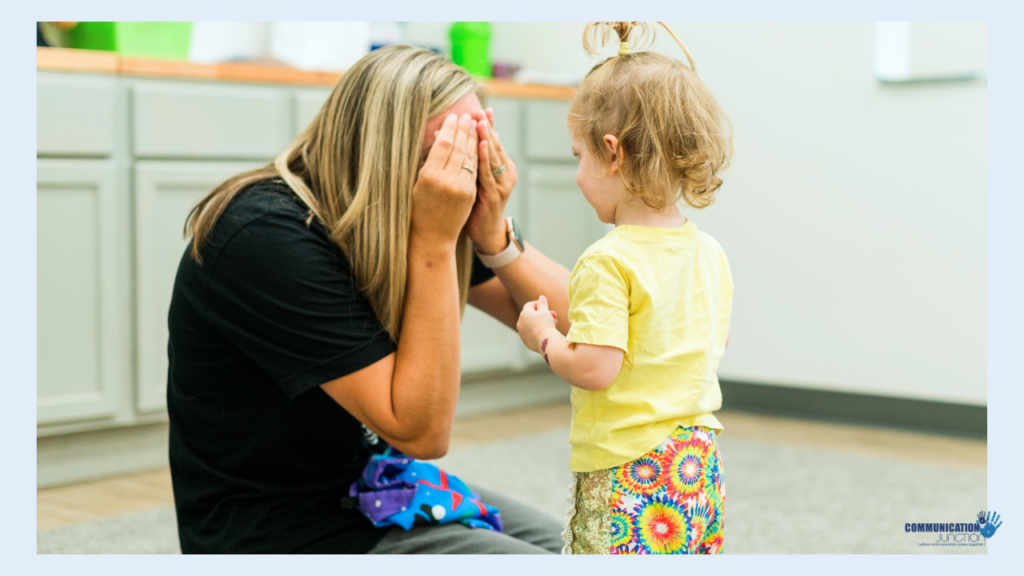
Did you know that something as simple as peek-a-boo is not only cute, but is actually helping your little one learn to talk?
Peek-a-boo is considered a gesture, just like waving, pointing, clapping, or reaching up to be picked up. These early gestures are more than just adorable… they’re your child’s first steps into communication.
Why Gestures Matter for Language Development
Before children can talk, they can move. Gestures allow them to use motor movements to express their wants, needs, and ideas. And here’s where the magic happens: When you respond to those movements with words, your child begins to learn that actions and words go together.
For example:
When your child claps → you say “yay!”
When they reach up → you say “up!”
When they point → you label what they see.
Over time, these repeated pairings help build meaning and meaning is the foundation of spoken language.
How many gestures should your child have?
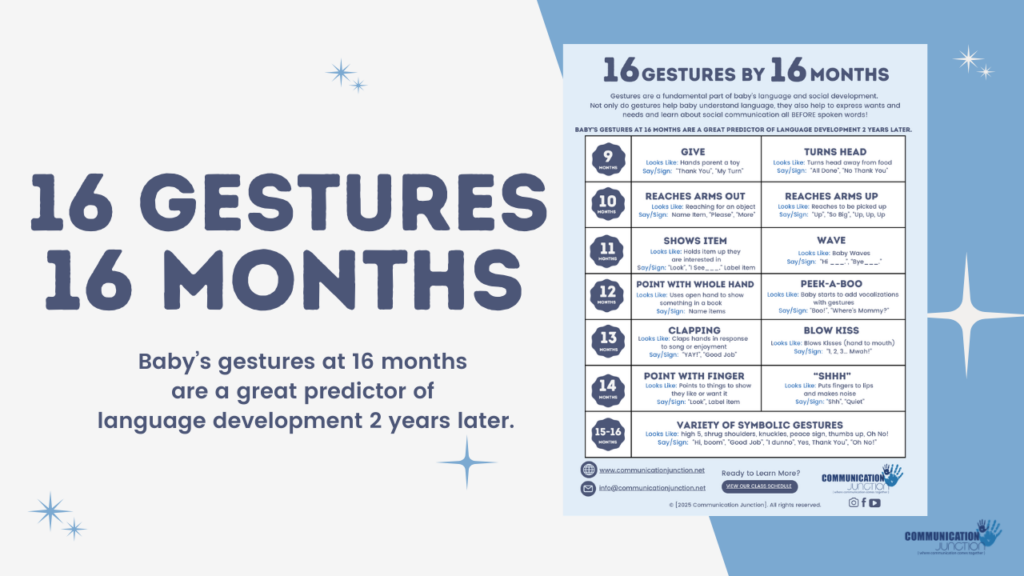
Research shows that the number of gestures your child uses by 16 months is a strong predictor of their spoken language skills at 36 months.
That means gestures aren’t just helpful, they’re powerful.
By around 16 months, we expect children to be using a variety of gestures (about 16 different ones) to communicate their wants and needs. Maybe you’ve heard “16 gestures by 16 months” online or from your pediatrician.
Examples of these “16 Gestures” might include:
- Waving
- Pointing
- Clapping
- Reaching up
- Peek-a-boo
- Shaking head “no”
- Nodding “yes”
We look for little ones to start imitating gestures around 9 months old, but oftentimes they are doing so earlier. If you’re not seeing many gestures yet, don’t worry. This is something you can start modeling today.
Be sure to grab our free download with 16 gestures you can begin modeling right away!
How Gestures Lead to Spoken Words
Gestures are just the beginning.
As your child’s communication grows, those natural gestures can evolve into sign language, a more consistent and intentional way to communicate.
These are the steps to help your child learn to talk:
- Gestures
- Signs
- Sound imitation
- Spoken words
Each step builds on the one before it.
This is why using signs won’t delay speech…it actually supports it. Signs give your child a clear way to practice communication while their speech skills are still developing.
You can learn more about this in our blog post on how sign language helps children start talking. Don’t miss the imitation graphic to see exactly how this progression unfolds.
Simple Ways to Work Towards the 16 Month Milestones
You don’t need anything fancy. Add gestures into your daily routines, games and playtime:
Easy Ways to Get 16 Gestures by 16 Months:
- When playing with a toy, model clapping and say “yay!”
- When picking your child up from the crib, point up and say “up!”
- When walking outside, point to things you see and name them (“ball”, “dog”, “car”)
- When changing a diaper play peek-a-boo and add in the words
Need a few examples of gestures and their meanings?
Our 16 Gestures by 16 Months guide will help you understand WHICH gestures to be modeling for your little ones. This guide paired with our 8-week Baby Sign and Play Classes will help you learn how to incorporate them into your everyday activities. In our baby sign language classes, we dive deep into how you can functionally add gestures to your every day routines, books you’re reading, play time and the songs you’re singing, to best support your little one’s spoken language skills.
One of our favorite rhymes to sing in class is this peek-a-boo song. Our YouTube channel has a series of sign language videos that you can watch to start modeling the gestures and signs while you sing to your baby.
The goal is simple: pair every gesture with a word. And if you model the sign that’s even better!
Gestures are fun, exciting, and one of the first ways your little one connects with you. And when you consistently pair those gestures with spoken language, you’re giving them the tools they need for their words to flourish.