If you’re the parent of a baby, toddler, or preschooler… you’re probably singing sing-along songs all day long.
- Singing during walks.
- Singing at bedtime when the baby won’t settle.
- Singing through diaper changes.
- Singing the grocery list.
- Singing in the car.
- Singing while wandering the aisles at Target.
- Even catching yourself humming the songs that are stuck in your head when no one else is around.
Some of us may feel more comfortable than others, singing in all the places about all the things—but the bottom line is this: singing is a parenting strategy most families naturally use.
So why do parents instinctively sing with their kids?
Because children love music. And it turns out, songs support something incredibly important: language development.
Songs are naturally soothing to children (even if you feel like you’re not a great singer). They provide rhythm, repetition, and predictability, three things young brains love. In fact, research shows that children who regularly participate in singing and music activities develop stronger early language skills, including vocabulary and grammar. These early language skills are important predictors of later reading and school success.
Why Sing-Along Songs Help Language Development
Songs Provide Repetition
Most children’s songs repeat the same words and phrases again and again. Repetition helps children:
- recognize words
- store them in memory
- attempt to imitate them
Because songs follow predictable patterns, children also start anticipating what comes next.
Songs Keep Children Engaged
Songs are fun and interactive. When children are engaged and enjoying themselves, their brains are more open to learning.
Songs Introduce New Words
Songs often include new vocabulary. Words that children may not hear in everyday conversation. Hearing those words repeatedly helps build their understanding and eventually their spoken vocabulary.
Songs Can Happen Anywhere
You don’t need a special moment to sing. Familiar tunes can easily be adapted to daily routines.
Sing about your day.
Sing about what you’re doing.
Sing about what’s happening around you.
Songs Make It Easy to Add Signs and Gestures
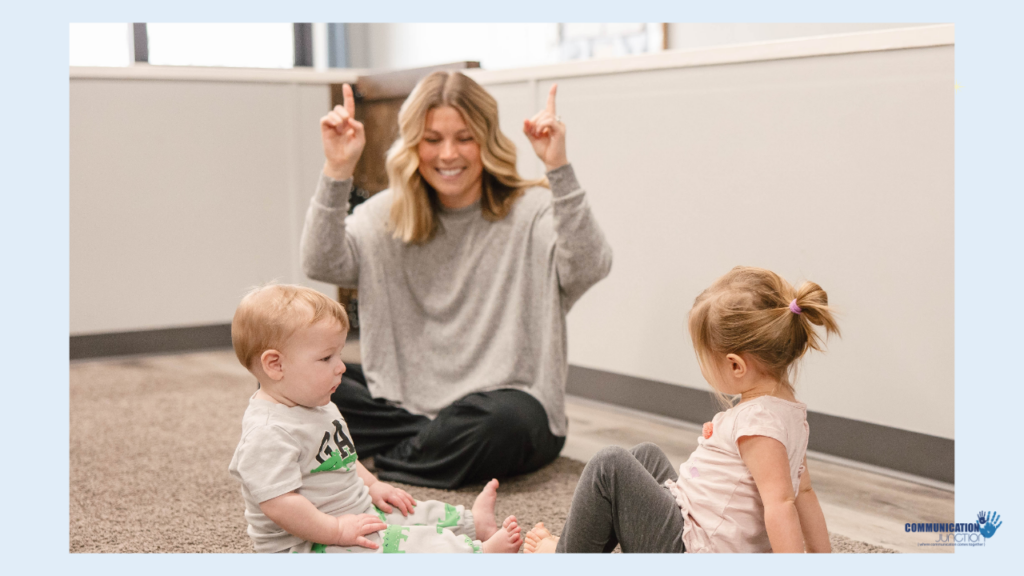
Songs are a natural place to add movements, gestures, and signs.When children hear a word, see a sign, and watch a gesture at the same time, it strengthens their understanding. The word becomes connected to both the meaning and the action.
How to Start Using Signs with Songs
This all sounds great… but where do you start?
What songs should you sing?
What signs should you use?
The good news is you don’t have to reinvent anything.
Many familiar children’s songs already work beautifully with signs and gestures.
On our YouTube channel, we have an entire playlist dedicated to sign language videos that teach signs and movements to pair with sing-along songs you’re probably already singing at home, including:
- Itsy Bitsy Spider
- If You’re Happy and You Know It
- The More We Get Together
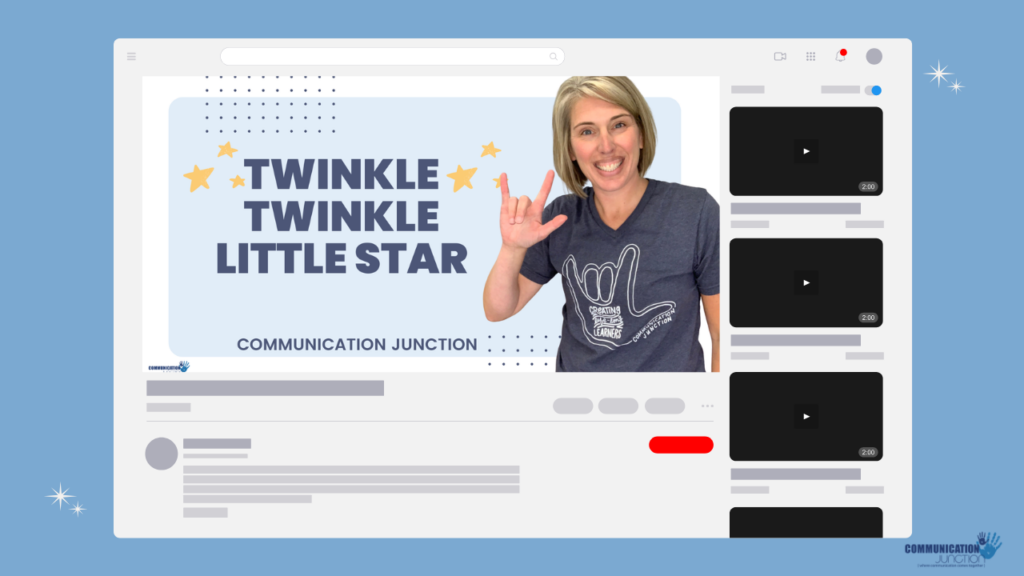
One of the most requested songs in our classes is Twinkle Twinkle Little Star. So we wanted to feature it here for you!
How to Sign Twinkle Twinkle Little Star
When we add signs to songs, we don’t sign every single word. Instead, we focus on the key ideas or concepts in the song.
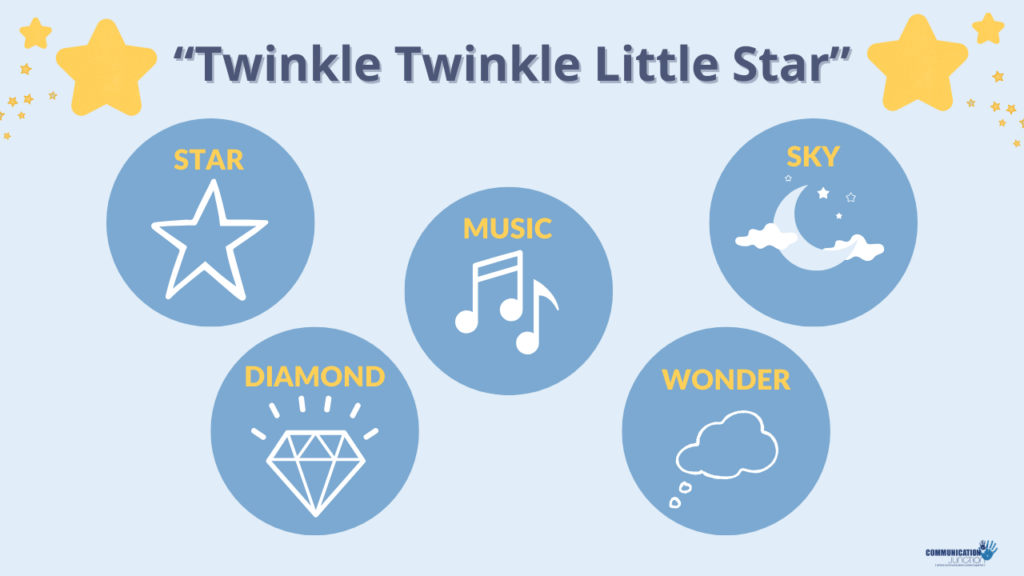
And if you’re ready to see it all in action, this video will help you learn how to sign Twinkle Twinkle Little Star using ASL vocabulary!
Just like adding sign language while you’re reading with your child, adding sign language to the sing-along songs you are singing helps your child make a connection between the words they are hearing and the signs you are using to build their vocabulary and spoken language.
Want to Learn More?
Sing-along songs are a core part of every class we teach at Communication Junction.
If you’re looking for ways to build communication, strengthen connection with your child, and learn more about early language development, our Sign and Play classes are a great place to start.
We’d love to have you join us.
Take Care,
Abbey