When families are getting ready to start their signing journey, I almost always hear the same three questions:
- When should we start signing?
- What signs should we start with?
- How do we actually fit signing into our day?
If you’re wondering about when to start signing and unsure what signs to begin with, I break those down here.
In theory, everything you need to know about getting started signing with your baby or toddler lives in that blog; however, putting the idea into practice can be challenging. The way that I teach families to incorporate signs into their everyday lives is designed to make getting started so simple, you can do it today.
The Easiest Way to Start Sign Language with Your Child: Add it into your routines.
Babies and toddlers thrive on predictability. They learn through repetition, consistency, and structure — which makes daily routines the perfect place to introduce signs.
Think about it: nearly everything you do with your child is already a routine. Washing hands. Getting dressed. Eating meals. Going for a walk. Bedtime. You’re already doing the work — signing simply fits into what’s already there.
How to Add Sign Language to Your Daily Routines
Instead of adding one more thing to your plate, the easiest way to begin signing is to add signs to the things you’re already doing every day.
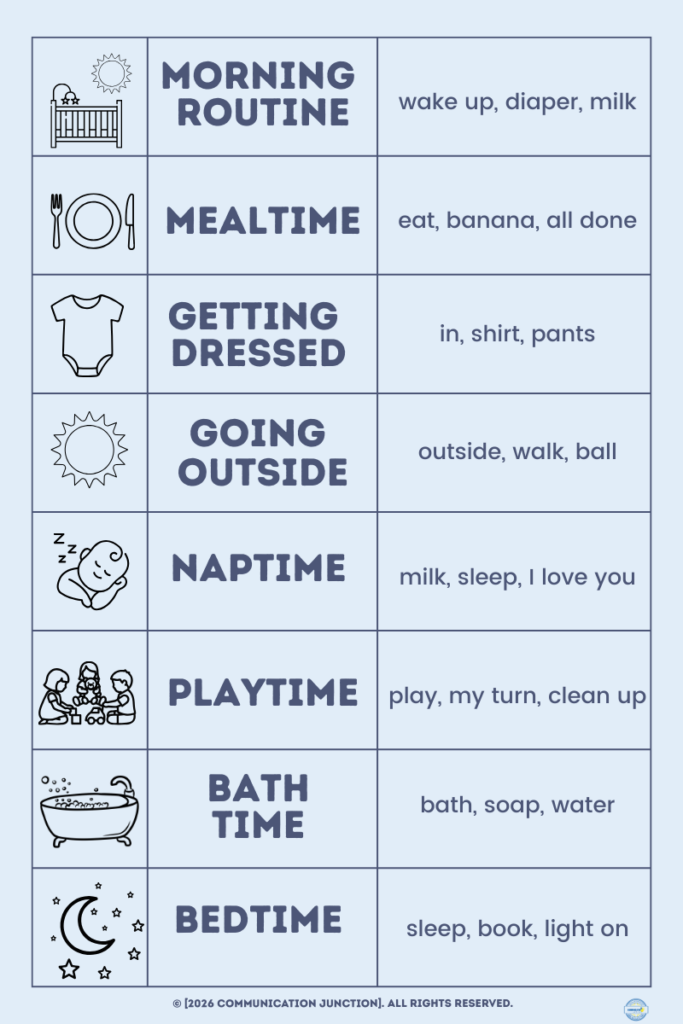
Step 1: Break your day into simple routines like these:
- Morning routine
- Mealtime
- Getting dressed
- Going outside
- Naptime
- Playtime
- Bath time
- Bedtime
These routines naturally repeat throughout your week, which is exactly what your child’s brain needs to learn language.
Step 2: Choose 2–3 signs per routine
Once you’ve identified your routines, pick two or three signs to use every single time that routine happens.
As I shared in our blog about how to teach your baby sign language, consistency matters more than quantity.
That means:
- Frequent exposure to the same words
- Consistent signing every time you say them
Learn sign language for your bedtime routine here.

Every day as you’re starting the bedtime or naptime routine with your child, you naturally say these words, pair your sign with the word every time you say them. Once it feels natural to be using these signs, then it’s time to add more!
Step 3: Add More Sign Language as You Feel Ready
As you get more comfortable, you can slowly add new signs — especially when you notice your little one trying to imitate you. Their signs may not look perfect (and that’s okay!), but if you see intentional and consistent movement of their hands, that’s them trying to tell you something!
Your job is simple:
Notice it, name it, and match it to the moment.
How Adding Sign Language to Your Routines Help Your Child’s Development
Signing within routines is one of the most natural, sustainable ways to support early communication. It removes the guesswork and helps signing feel doable, even on busy days.
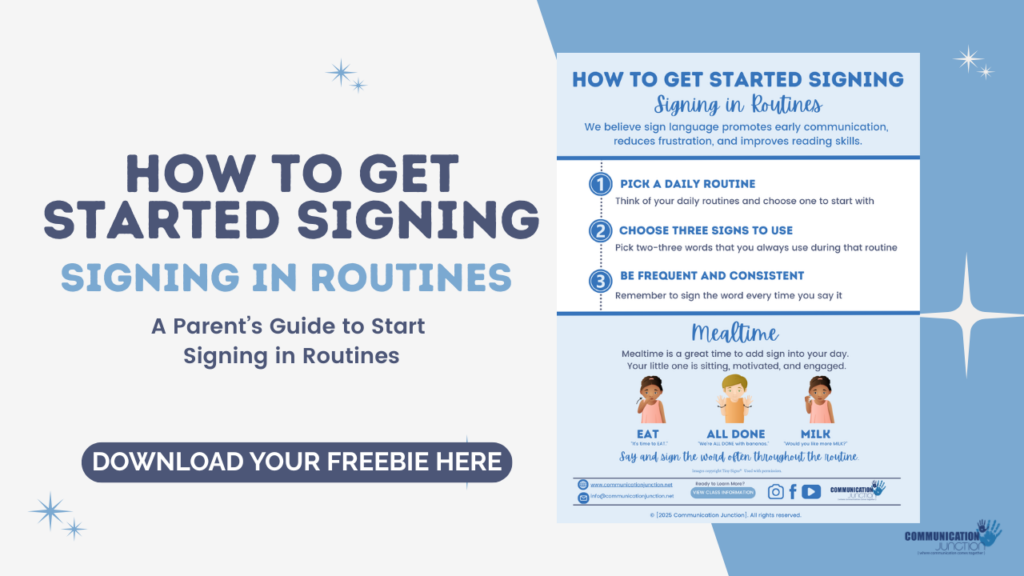
To help you get started, I’ve created a free download that walks you through adding signs to a common daily routine — complete with examples you can use right away.