“Mama.” “Dada.” (Or in my son Owen’s case—“dog.”)
That first word? It’s magic.
For many parents, hearing your child’s first word becomes a core memory. But it can also leave you second-guessing: “Did I really just hear that?”
Once your child starts using their voice, a whole new world opens—and often, so do the questions:
“Was that really a word? How do I know?”
“Should they be saying more by now?”
“What if my child isn’t talking yet?”
If you’ve ever found yourself Googling any of those things—Welcome. You’re not alone. Let’s walk through what counts as a word, how many words are typical by age, and when it might be time to check in with a professional.
What Counts as a Word? (And What Doesn’t)
As speech-language pathologists and early childhood experts, we may define a “word” a little differently than you do.
I still remember explaining to my husband why we couldn’t expect our 1-year-old’s speech to sound like ours, but we could proudly say he was talking.
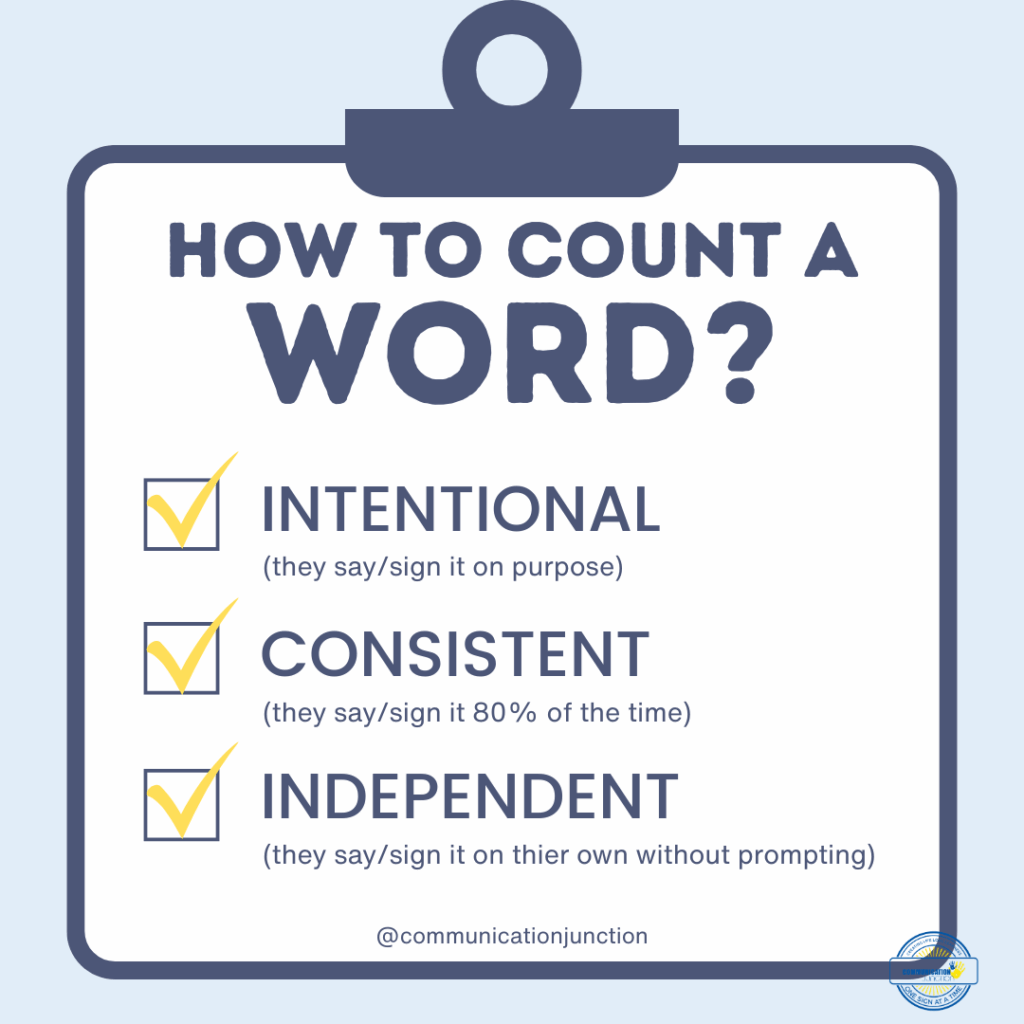
To count as a word, your child’s communication needs to be:
- Intentional – they say or sign it on purpose
- Consistent – they use it about 80% of the time
- Independent – they use it on their own, without being prompted
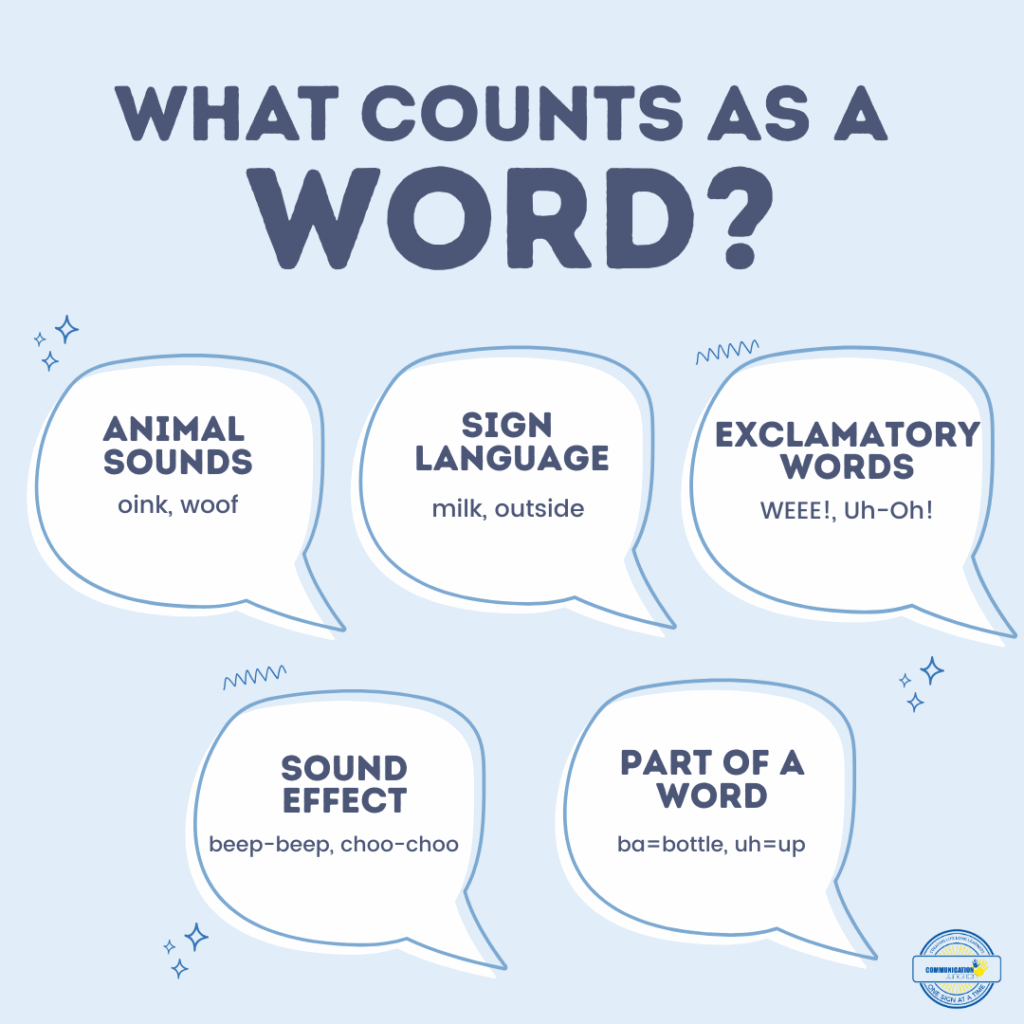
What counts as a word:
- Spoken words (“ball,” “mama”)
- Sign language (like “more” or “milk”)
- Word approximations (“ba” for ball, “nana” for banana)
- Animal sounds (“woof” for dog, “moo” for cow)
- Sound effects with meaning (“vroom” for car)
If your child is using that sound or sign intentionally, consistently, and independently to refer to the same thing—that’s a word!
Looking for a quick reference guide? Download our FREE “What Counts as a Word” Guide.
What DOESN’T count as a word:
- Repeating something from TV or a book with no clear meaning
- Babbling or jargon not tied to anything specific
- Unclear or inconsistent sounds without reference
How Many Words Should My Child Have by 12-months?
The milestone for a 12-month-old is 1 to 3 meaningful words, such as “mama,” “dada,” “hi,” or “bye.”
Here’s a breakdown of what’s typical by age.
Milestone = what 90% of children can do
Average = what 50% of children are doing at that age
| Age | Milestone | Average |
|---|---|---|
| 12 months | 1-3 words | ~5 words |
| 15 months | 5 words | ~10 words |
| 18 months | 10 words | ~50 words |
| 24 months | 50 words | ~300 words |
| 36 months | 250 words | ~1,000+ words |
When to Be Concerned About Your Child’s Speech
You know your child best. If you’re noticing any of these red flags, it’s a good idea to check in with your pediatrician or a licensed speech-language pathologist:
- No words (spoken, signed, or meaningful sounds) by 16 months
- Fewer than 50 words or no two-word combinations by 24 months
- Not using gestures (like pointing or waving) by 12 months
- Limited interest in communication or people
Remember: Early support is never a bad thing. Speech delays are more common than many people realize—and getting help early can make a big difference.
You can request a free speech and language assessment through your state’s early intervention program—no referral needed.
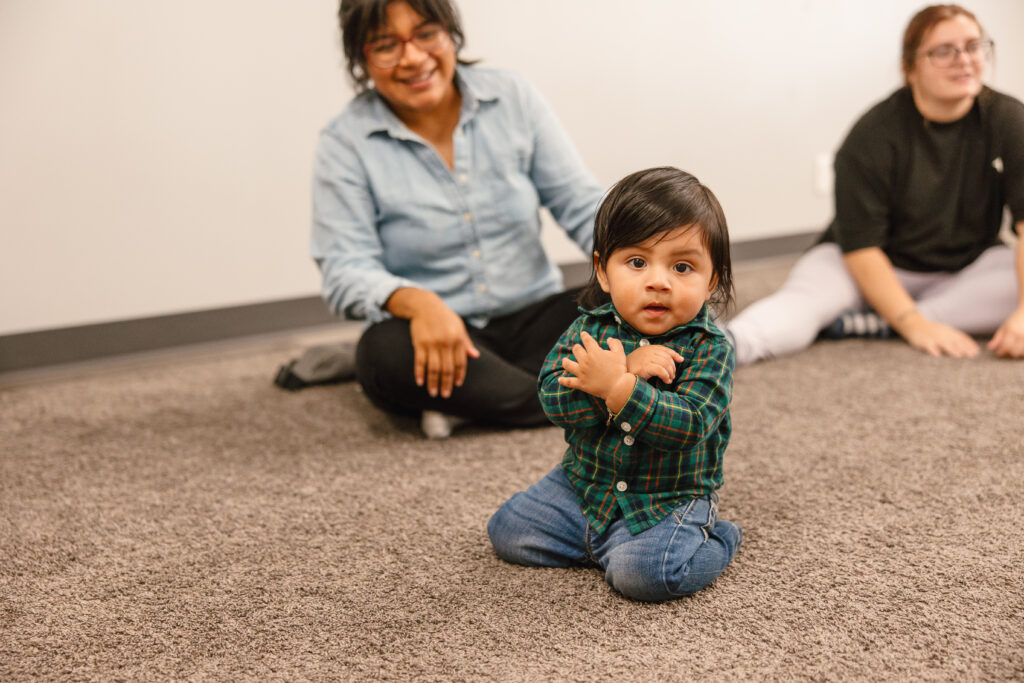
Looking for Speech Support for Your Child? Try Signing!
Many families hear that signing reduces frustration, but fewer realize that it’s also a powerful tool to support spoken language development. Using signs gives your child a visual and motor way to express themselves before spoken language and beyond.
Our Baby Sign Language and Toddler Sign Language classes are a great place to start if you are ready to start supporting your child’s spoken language skills.
Remember: Every Word Is a Win
If you’re reading this, it means you care deeply about your child’s development. That alone makes a difference.
Milestones can seem overwhelming. Use them as a guide to help you know what to look for. What matters most is that you’re showing up, paying attention, and celebrating progress.
Want help getting started with sign language for your child?
- 📥 Download our free “What Counts as a Word” guide
- 🎶Join us for a Sign + Play class
- 💬Email us anytime—we’re happy to help
You’ve got this—and we’re cheering you on every step of the way. 💛